Blog
Pharmaceutical Project Management: A Practical Guide for Regulated Environments
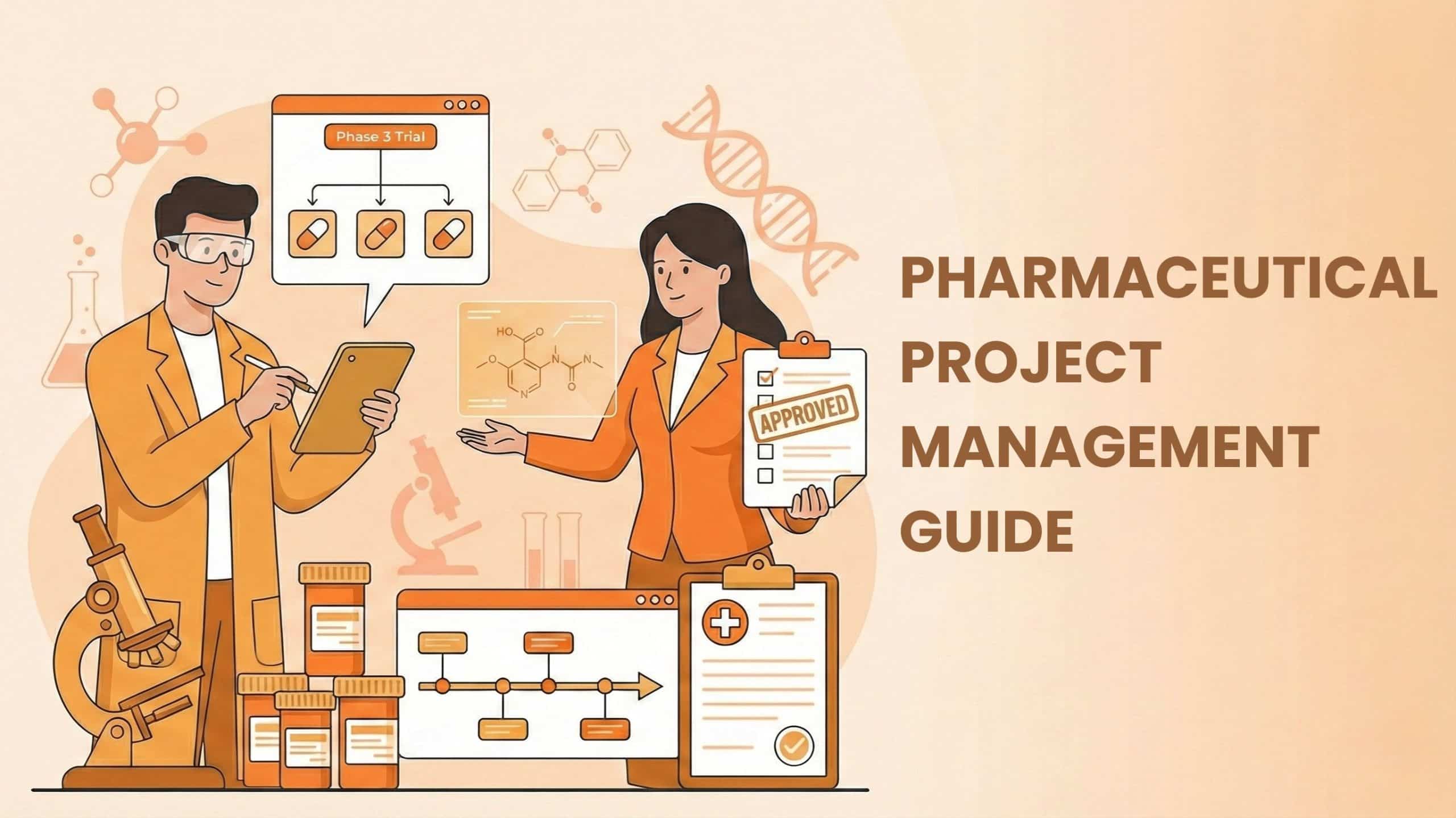
Regulation, scientific uncertainty, and long decision chains shape pharmaceutical project management. Projects often span years, involve multiple regulatory authorities, and rely on decisions that must hold up long after execution is complete.
This guide provides a complete overview of pharmaceutical project management – covering how projects are planned, governed, and delivered across R&D, clinical programs, manufacturing, compliance initiatives, and portfolios. It explains what makes pharma projects different, where execution typically breaks down, and how organizations can manage complexity without slowing progress.
1. What Is Pharmaceutical Project Management?
Pharmaceutical project management plans, coordinates, and controls projects across the pharmaceutical lifecycle in regulated, cross-functional environments.
It applies to a wide range of pharmaceutical initiatives, including:
- Research and development (R&D)
- Clinical trial programs
- Process development and technology transfer
- Manufacturing and scale-up
- Capital investment (CAPEX) and facility projects
- Regulatory, quality, and compliance initiatives
At its core, pharmaceutical project management provides a structured way to organize work and responsibilities across scientific, regulatory, quality, manufacturing, and business functions. This structure helps projects progress in a controlled and transparent manner over long development cycles.

2. Why Pharmaceutical Project Management Is Different from Traditional Project Management
Pharmaceutical project management differs from traditional project management because progress depends on decisions, risk acceptance, and regulatory readiness – not just task completion.
In pharmaceutical environments, advancing a project without resolving key uncertainties creates long-term exposure that teams may not be able to correct later. As a result, governance and decision timing matter as much as execution.
A Discipline Focused on Decisions, Not Just Delivery
Pharmaceutical projects advance through a series of high-impact decisions rather than linear execution steps. These decisions determine whether a program proceeds, pauses, changes direction, or is terminated altogether.
As a result, pharmaceutical project management prepares decisions at defined points in the lifecycle. It clarifies ownership of risk and assumptions. It also ensures alignment across scientific, regulatory, quality, and business stakeholders before projects advance.
Project management therefore shifts from task coordination to decision orchestration – ensuring that when a project progresses, the organization is prepared to commit resources, accept risk, and defend outcomes.
Operating in Regulated and Uncertain Environments
Pharmaceutical projects are executed in environments where:
- regulatory expectations evolve over time
- scientific outcomes cannot be fully predicted in advance
- late-stage changes are costly and disruptive
- documentation and traceability are mandatory, not optional
Effective pharmaceutical project management must therefore balance structure and flexibility. It introduces enough governance to manage risk and compliance, while allowing teams to adapt as new data emerges.
This balance – between control and adaptability – is what differentiates successful pharmaceutical project management from approaches borrowed from less regulated industries.
3. Types of Pharmaceutical Projects
Pharmaceutical organizations manage a range of project types that differ significantly in objectives, timelines, risk profiles, and regulatory exposure. While these projects often share governance principles, they cannot be managed in the same way without introducing friction, delays, or unnecessary risk.
Understanding the main categories of pharmaceutical projects helps clarify why structure, documentation, and decision oversight must adapt to the nature and maturity of the work.

Research and Drug Discovery Projects
Research and drug discovery projects focus on early-stage scientific exploration, target identification, and proof of concept. They involve high scientific uncertainty, iterative experimentation, and evolving hypotheses rather than fixed requirements.
Project management at this stage emphasizes coordination across research teams, visibility into assumptions and outcomes, and decision points that determine whether further investment is justified.

Clinical Trial Programs
Clinical trial programs span multiple phases and involve coordination across internal teams, external partners, and regulatory authorities. They are defined by long timelines, strict protocol adherence, and extensive documentation and reporting obligations.
Project management aligns clinical operations, regulatory affairs, data management, and quality functions.

Process Development and Technology Transfer Projects
These projects bridge R&D and manufacturing by translating laboratory processes into scalable, reproducible production methods. They require close coordination between development and manufacturing teams and careful sequencing between development, qualification, and readiness activities.
Project management plays a key role in managing dependencies, aligning timelines, and ensuring that knowledge transfer is structured and traceable.

Manufacturing and Scale-Up Projects
Manufacturing and scale-up projects prepare production capabilities to meet commercial demand. They typically involve equipment qualification, facility readiness, and integration with supply chain and quality systems.
Delays or misalignment at this stage can directly affect launch timelines and regulatory commitments, making structured planning and cross-functional coordination essential.

Capital Investment and Facility Projects (CAPEX)
CAPEX projects include new facilities, clean rooms, production lines, and major equipment upgrades. They involve significant financial investment, long planning and approval cycles, and tight integration with validation and regulatory timelines.
Project management must align engineering execution with quality, regulatory, and operational readiness to avoid late-stage rework and compliance risk.

Regulatory, Quality, and Compliance Initiatives
Not all pharmaceutical projects are tied directly to product development. Organizations also manage initiatives driven by regulatory remediation, inspection readiness, quality system upgrades, and compliance-related technology changes.
These projects often run alongside development and manufacturing initiatives and compete for the same specialized resources, increasing the importance of coordinated oversight.

4. Governance and Decision-Making in Pharmaceutical Project Management
In pharmaceutical projects, governance does not sit on top of execution as a reporting layer. Governance controls risk, makes decisions explicit, and enforces accountability across long development cycles.
Governance as a Decision Framework
Pharmaceutical project governance provides a structured way to prepare, validate, and record decisions at defined points in the lifecycle. These decisions determine whether programs continue, pause, change direction, or stop, and formalize how teams weigh scientific evidence, regulatory considerations, quality requirements, and business priorities before making commitments.
Without this structure, decisions drift, and teams leave risk implicit rather than addressing it directly.
Decision Timing and Continuous Oversight
In regulated development environments, the timing of decisions often has more impact than the decisions themselves. Delayed decisions allow unresolved assumptions and risks to propagate across phases, reducing flexibility and increasing downstream exposure.
Effective governance therefore operates as a continuous discipline. It intervenes early enough to shape outcomes, rather than confirming them once options have narrowed and commitments become difficult to reverse.
Cross-Functional Accountability
Pharmaceutical projects span scientific, regulatory, quality, manufacturing, and commercial domains. Governance ensures that progress is not declared by one function in isolation from the others.
By clarifying who has decision authority, what evidence is required, and how decisions are documented, governance reduces misalignment and limits rework driven by conflicting assumptions.
Governance Beyond Individual Projects
Governance in pharmaceutical organizations must extend beyond individual initiatives to the portfolio as a whole. Portfolio-level governance provides visibility into priorities, capacity constraints, and aggregate risk exposure, enabling organizations to balance ambition with feasibility.
Without this perspective, even well-managed projects can fail due to systemic overload or misaligned investment.
In pharmaceutical development, these governance and decision principles are often operationalized through phase-based frameworks such as Stage-Gate®, which formalize decision points between development stages. Rather than prescribing execution details, these frameworks provide a consistent structure for evaluating readiness, risk, and investment before projects advance.

5. Documentation, Traceability, and Regulatory Readiness in Pharmaceutical Projects
Across all pharmaceutical project types, from early R&D to manufacturing and compliance initiatives, documentation and traceability are foundational requirements, not supporting activities.
Documentation as a Core Project Output
In pharmaceutical projects, documentation must evolve in parallel with execution. Beyond formal deliverables, it captures the rationale behind decisions, changes in scope, and the handling of deviations and risks.
When documentation reflects actual project decisions and outcomes, teams retain control and avoid late-stage correction.
Traceability Across Decisions and Deliverables
Traceability links data, decisions, and outcomes over time. It allows organizations to demonstrate why choices were made, how risks were addressed, and how changes were justified as evidence evolved.
Without traceability, even sound decisions become difficult to explain or defend during regulatory review.
Regulatory Readiness as a Continuous State
Regulatory readiness is not achieved at a single milestone. It emerges from continuous alignment between execution, documentation, and oversight throughout the project lifecycle.
Projects that maintain readiness as work progresses reduce the risk of last-minute consolidation, incomplete records, and avoidable delays.

6. Risk Management in Pharmaceutical Project Management
Risk management sits at the center of pharmaceutical project management because teams advance projects with incomplete data, evolving regulatory expectations, and long-term consequences. Rather than eliminating uncertainty, effective risk management makes it explicit and actionable as projects progress.
In pharmaceutical environments, unmanaged risk does not disappear. It accumulates and resurfaces later, when options are limited and correction is costly.
Risk as an Input to Decisions
In pharmaceutical projects, risk management exists to inform decisions, not to maintain registers. Scientific, regulatory, operational, and compliance risks directly shape decisions to advance, pause, change direction, or stop a project.
When risks are not actively integrated into decision-making, projects often move forward with unresolved exposure that governance alone can no longer contain.
The Cost of Late Risk Resolution
When teams leave risks unresolved early, those risks spread to other phases and functions. In pharmaceutical projects, this commonly results in late-stage rework, delayed submissions, increased regulatory scrutiny, or reduced flexibility in development and manufacturing plans.
Effective pharmaceutical project management addresses risk early enough to preserve options, rather than documenting it once those options are gone.
Many of these risk patterns mirror failure modes commonly observed in complex, multi-stakeholder projects across industries.

7. Portfolio and Resource Management in Pharmaceutical Organizations
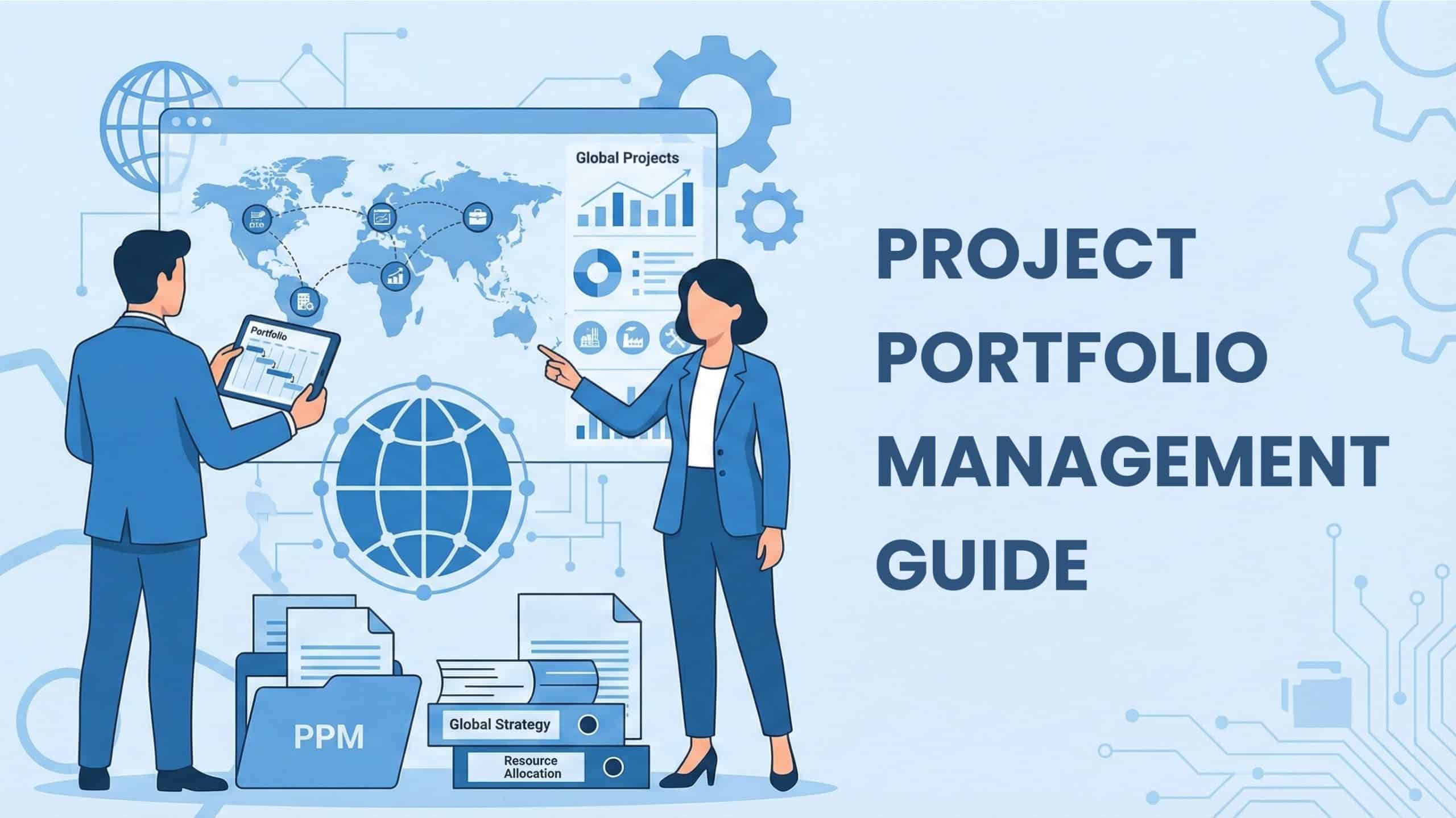
Pharmaceutical organizations rarely manage projects in isolation. They manage portfolios of concurrent projects that compete for the same expertise, facilities, capital, and regulatory attention. Portfolio and resource management aligns ambition with capacity across long and uncertain development horizons.
Portfolio-Level Prioritization and Balance
Pharmaceutical portfolios typically span projects at different stages of maturity, from exploratory research to late-stage development and manufacturing readiness. Portfolio management enables organizations to prioritize initiatives consistently, balance risk across programs, and align investment decisions with strategic objectives.
This perspective helps ensure that organizations commit resources where evidence supports continuation, and that lower-value or higher-risk initiatives are reconsidered before they absorb disproportionate capacity.
Managing Shared and Constrained Resources
Pharmaceutical projects rely on specialized resources that are often scarce, including subject matter experts, quality and validation teams, laboratories, and production facilities. When these resources are overcommitted or poorly coordinated, delays propagate across the portfolio.
Effective resource management provides visibility into demand and capacity, allowing organizations to identify constraints early and adjust plans before conflicts disrupt execution.
Keeping Portfolio Decisions Aligned with Execution
Portfolio decisions must remain connected to execution realities as projects evolve. Changes in risk, timelines, or regulatory expectations at the project level can materially affect portfolio feasibility and resource availability.
Maintaining this alignment allows organizations to revisit priorities, rebalance workloads, and adapt investment decisions without waiting for formal crises to emerge.

8. Project Management Software in Pharmaceutical Environments
Generic project management tools typically prioritize speed, flexibility, and ease of use. In pharmaceutical settings, these characteristics often become limitations rather than advantages.
Pharmaceutical teams need systems that sustain control as projects mature, supporting structured governance, traceability, and regulatory readiness over long timelines. When tools do not meet these requirements, organizations rely on spreadsheets, shared drives, and manual coordination, which fragments visibility and increases risk.
In this context, project management software adds value less through task automation and more through decision support, traceability, and oversight. This matters most where organizations require solutions designed specifically to support regulated, decision-driven project execution.

9. Measuring Success in Pharmaceutical Project Management
In pharmaceutical environments, teams cannot assess project success by delivery speed alone. Because projects advance under uncertainty and regulatory scrutiny, meaningful measures emphasize decision quality, readiness, and control rather than simple schedule adherence.
Rather than relying on exhaustive KPIs, organizations often look for a small set of signals that indicate whether projects are genuinely under control:
- decisions are made on time and with clear ownership
- documentation and traceability remain consistent as projects evolve
- portfolio outcomes become more predictable over time
These signals tend to surface issues earlier than traditional milestone tracking and allow teams to intervene before problems become difficult or expensive to reverse.
10. Final Perspective
Pharmaceutical project management works best when organizations recognize that structure, governance, documentation, risk management, and portfolio oversight are not separate concerns, but interdependent disciplines.
By aligning decisions with evidence, maintaining regulatory readiness throughout the lifecycle, and managing portfolios with realistic capacity awareness, pharmaceutical organizations can improve predictability without sacrificing scientific flexibility – even in environments defined by uncertainty.














 Project Management


 Portfolio Management

 Task Management


 Gantt Chart


 Kanban Board


 Scheduler


 Resource Management

 Time Tracking


 Expense Tracking


 Content Management


 Collaboration


 Reporting


 Portfolio Management


 Project Management


 Resource Management


 Time & Expense Tracking


 Gantt Chart Planning
  Cost & Budget Management


 Demand Management


 Stage and Gate Review Support


 Document Management


 Team Collaboration


 Risk & Change Management


 Dashboards & Reports


 Workflow Management


 Integrations
 Customization
 Integrations
 Security
 Hosting
 Configuration