Blog
Implement Stage-Gate in Your Organization: A Step-by-Step Guide
Introduction – From Framework to Transformation
If your organization develops new products or innovations, you’ve likely heard of the Stage-Gate process – a proven framework that brings structure and clarity to innovation. But while many teams understand the concept, far fewer succeed in putting it into practice. If you’re looking to implement Stage-Gate in your organization, this guide will show how to make the framework work in real life – turning theory into a practical system that drives better decisions and faster results.
This article explores how to implement the Stage-Gate process effectively, helping you move from idea to execution with greater visibility, control, and confidence. In the following pages, we’ll look at what it takes to make Stage-Gate thrive inside your organization – how to embed it, sustain it, and make it a genuine driver of innovation success.
“Stage-Gate is more than a methodology – it’s a mindset for managing innovation with clarity and confidence.” (1)
1. Establish Clear Governance to Implement Stage-Gate Effectively
Every successful Stage-Gate implementation begins with governance. Before mapping stages or defining deliverables, it’s essential to establish who makes key decisions and how. Clear governance gives the process its structure, authority, and consistency.
“Governance is the backbone of innovation – without it, even great ideas lose direction.” (2)
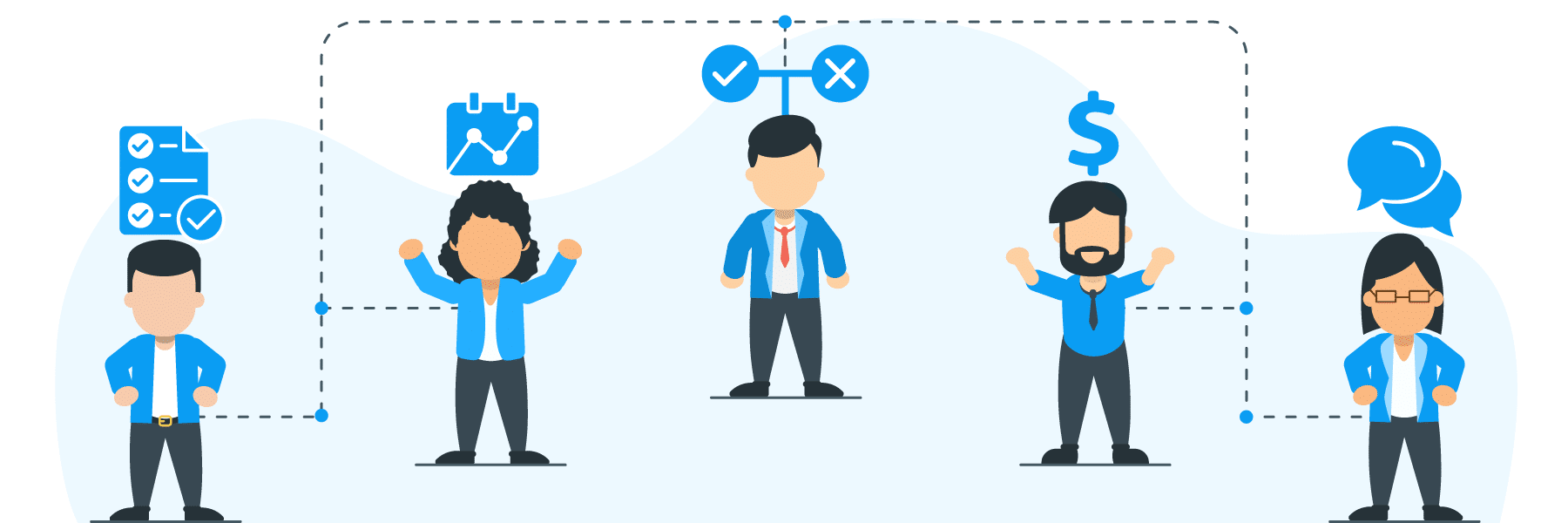
Start by identifying your Gatekeepers – the senior decision-makers responsible for approving, redirecting, or stopping projects at each gate. Their job isn’t to manage tasks, but to evaluate whether a project continues to deserve investment based on results and evidence.
Next, clarify supporting roles:
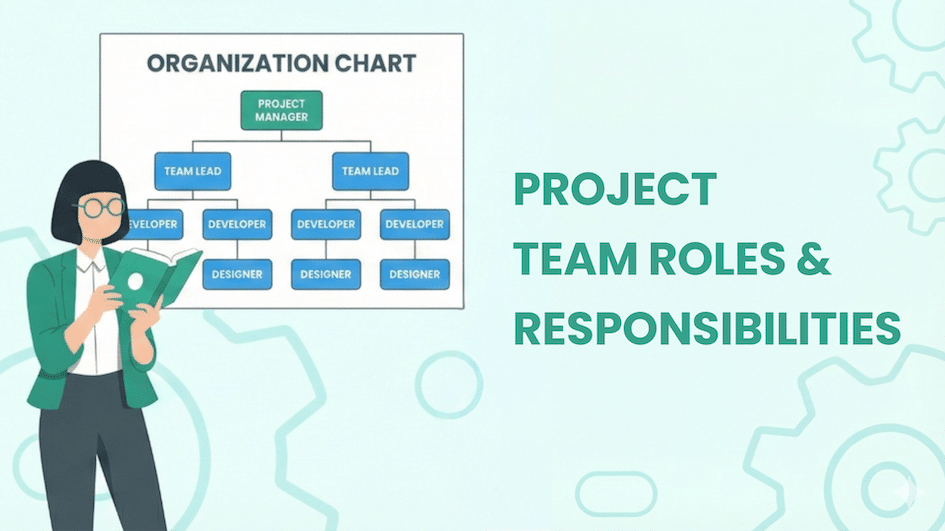
- Project Leaders prepare and present the data, from business cases to risk analyses.
- Facilitators coordinate reviews, keep discussions focused, and document outcomes.
Each gate should have:
- Defined ownership – everyone knows who decides.
- Transparent criteria – decisions are based on evidence, not opinions.
- Clear accountability – follow-up actions are tracked and visible.
Strong governance doesn’t mean bureaucracy. It means creating a repeatable decision-making structure that balances speed with discipline. The best approach is to start small: pilot the process with a few projects, refine your criteria, and build from there.
When governance is defined early, Stage-Gate becomes more than a review framework – it becomes a leadership tool that ensures every project aligns with your strategy and delivers measurable value.
2. Design and Customize Your Stages
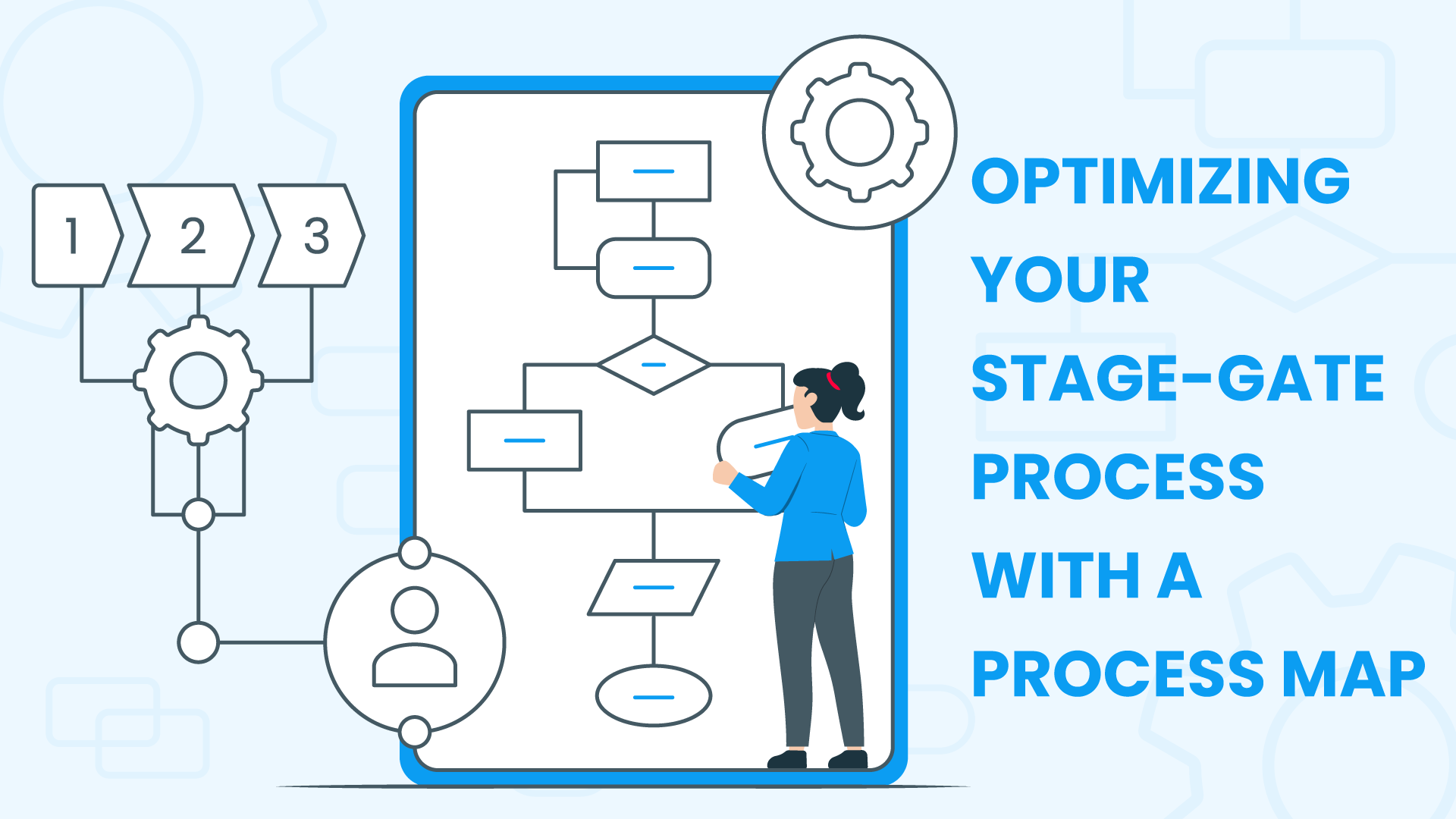
With governance in place, the next step is to shape the structure of your Stage-Gate process – the flow of stages and gates that will carry projects from idea to market.
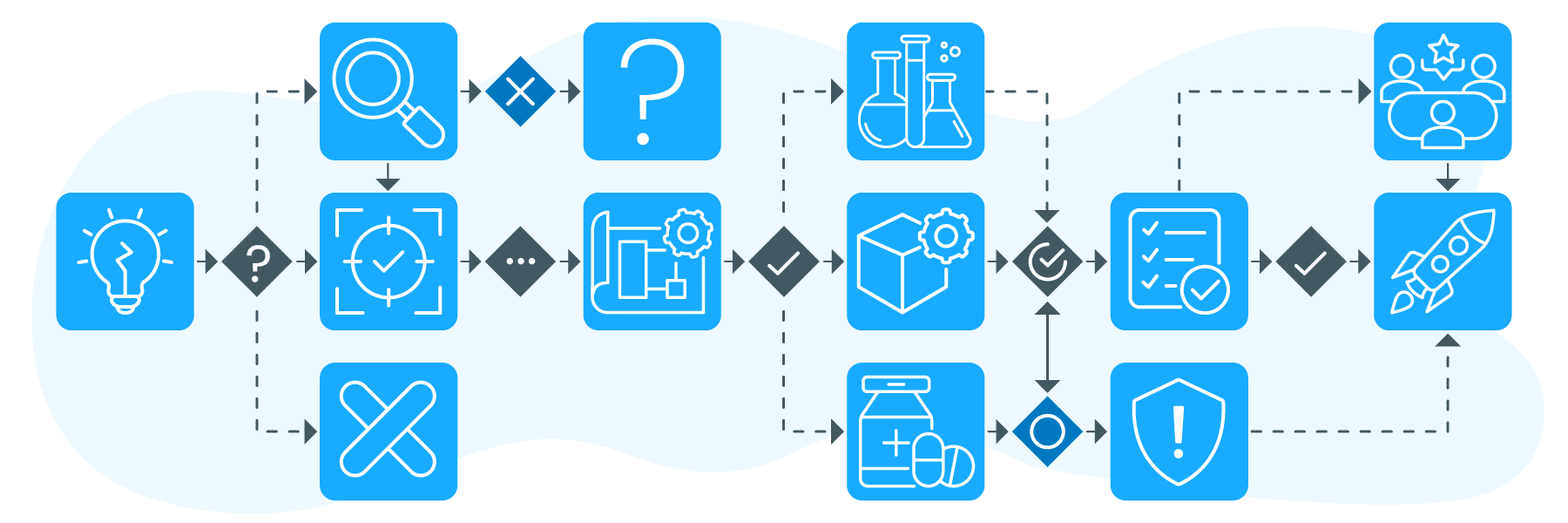
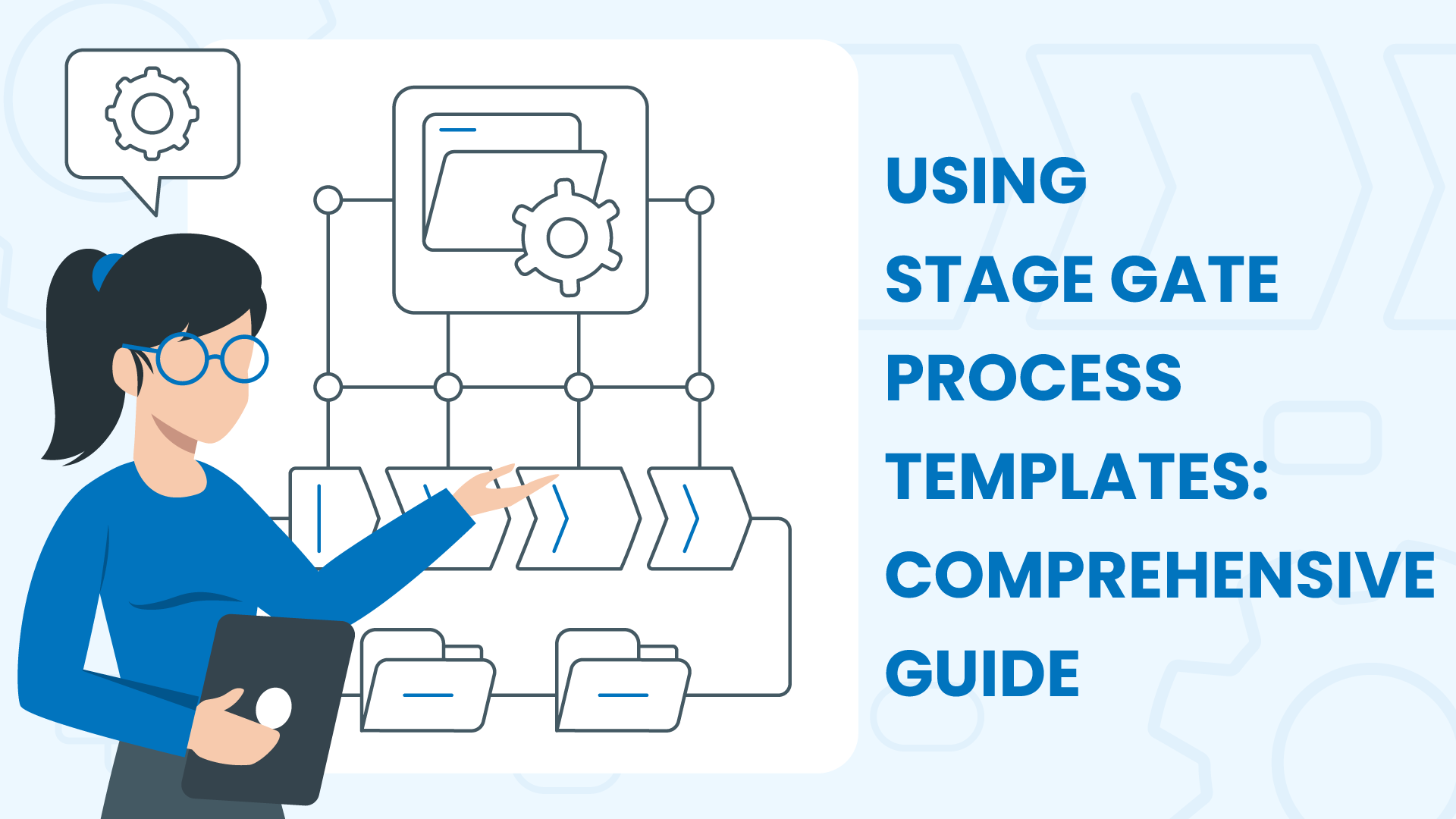
The classic model usually follows six steps: Discovery, Scoping, Business Case, Development, Testing, and Launch. These provide a solid foundation, but they’re not meant to be rigid. One of the strengths of Stage-Gate lies in its flexibility. The framework should adapt to your organization’s size, risk profile, and type of innovation.
A large industrial manufacturer, for example, may add extra validation gates for compliance and safety. A software company might merge stages or shorten the cycle to support faster iteration. What matters most is that each stage and gate serves a clear purpose – capturing the right information at the right time to support well-informed decisions.
When tailoring your process to implement Stage-Gate effectively, focus on clarity over complexity. Each stage should answer a specific question: Is this idea still worth pursuing? Do we have the evidence to move forward?
Is this idea still worth pursuing? Do we have the evidence to move forward?
Organizations that take time to customize their model typically see smoother reviews and higher project success rates. Instead of forcing teams to fit a generic template, the process evolves to reflect how the company truly works. And that’s what transforms Stage-Gate from a procedural checklist into a genuine enabler of innovation.
3. Define Gate Deliverables and Decision Criteria for Stage-Gate Implementation
Once your stages are mapped, the next challenge is making them meaningful. A well-designed Stage-Gate process doesn’t just divide a project into steps – it ensures that each gate is backed by solid, decision-ready information.

At every gate, decision-makers need clarity: Is the project on track? Are the risks acceptable? Do the numbers still make sense? To answer those questions confidently, teams must present consistent, objective data.
While the exact deliverables will depend on your business and industry, most organizations include a mix of:
- Strategic metrics: market opportunity, alignment with portfolio goals.
- Financial data: projected ROI, cost-to-complete, and resource requirements.
- Technical validation: feasibility studies, risk assessments, prototype results.
- Operational readiness: resource allocation, dependencies, and timelines.
These inputs are reviewed against predefined gate criteria, ensuring that each decision is transparent and fact-based. Creating a standardized gate checklist helps maintain this consistency. It keeps reviews focused, reduces debate over irrelevant details, and helps new teams adapt more quickly.
According to McKinsey, “companies that standardize their project review criteria make decisions up to 30% faster – and with higher confidence – than those relying on informal evaluations.” (3)
Above all, the purpose of a gate isn’t to block progress but to create discipline. When the data is clear and expectations are shared, teams spend less time defending their work and more time improving it. Over time, this consistency strengthens both governance and trust across the organization.
4. Digitize Your Process with the Right Tools
Even the best-designed Stage-Gate framework can lose momentum if it relies on disconnected spreadsheets and manual updates. When information is scattered across folders, email threads, or shared drives, decisions slow down, accountability fades, and the process itself becomes a burden.
That’s where technology makes the difference. A dedicated project or portfolio management platform brings structure, transparency, and automation to Stage-Gate – turning it from a static model into a living system.
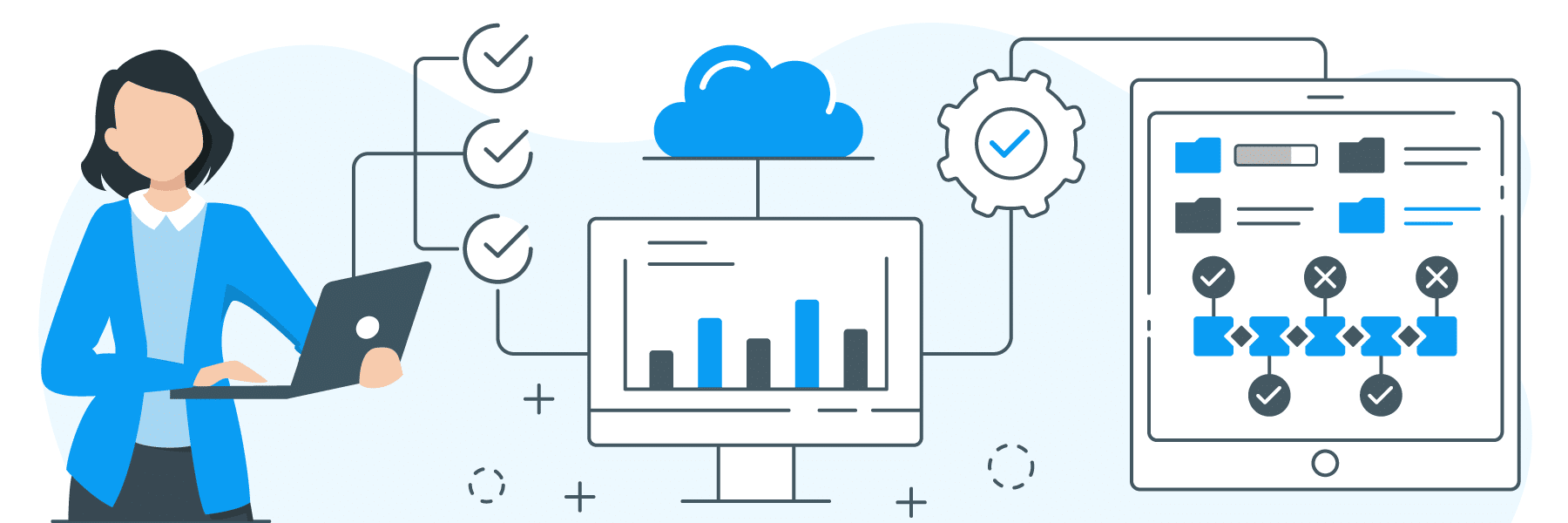
The right digital platform should make implementing Stage-Gate easier by allowing you to:
- Map your stages and gates visually, with clear workflows and approvals.
- Centralize documents and deliverables, so teams always work from a single source of truth.
- Automate reporting on KPIs, budgets, and progress to support faster gate reviews.
- Track resource usage and dependencies across multiple projects in one place.
- Support collaboration between departments without losing version control.
With these capabilities in place, reviews become faster and more objective, and decision-makers have real-time visibility into every active project.
Modern solutions like Cerri Project provide that digital backbone – helping organizations structure gates, track deliverables, and streamline approvals, all while maintaining governance and consistency. By centralizing information in one platform, teams spend less time chasing data and more time focusing on innovation.
Digitalizing your Stage-Gate process isn’t just about efficiency – it’s about confidence. When everyone sees the same data at the same time, decisions are quicker, risks are clearer, and projects move forward with purpose.
5. Train and Engage Your Teams
No process succeeds without the people behind it.
The most common reason Stage-Gate initiatives lose momentum isn’t poor design – it’s a lack of understanding or buy-in from the teams expected to use them.
Implementing Stage-Gate means introducing new habits: structured reviews, documented deliverables, shared ownership. To make that transition smooth, training and engagement are essential.

Start by making sure everyone understands why the process exists. Stage-Gate isn’t meant to add bureaucracy – it’s there to simplify decision-making, reduce risk, and create clarity. When people see how it helps rather than hinders their work, they participate more actively and consistently.
Focus your enablement efforts on three levels:
- Leadership alignment: Executives and Gatekeepers set the tone. They need to model transparency, discipline, and commitment to data-driven decisions.
- Project teams: Train them to prepare clear business cases, update progress consistently, and use the tools provided to their full potential.
- Facilitators or PMOs: Equip them to guide reviews, manage documentation, and continuously refine the process based on feedback.
Encourage open communication as you roll out the process. Invite feedback after each review cycle and adjust where necessary – not to dilute the model, but to ensure it fits your organization’s rhythm.
When teams feel empowered rather than policed, Stage-Gate becomes part of how they think, not just something they follow. Over time, that shared mindset builds a culture of accountability and continuous improvement – the real hallmark of a mature innovation system.
6. Start Small and Continuously Improve Your Stage-Gate Implementation
Implementing Stage-Gate isn’t a one-off exercise – it’s a process of learning, refining, and scaling. The organizations that succeed don’t aim for perfection from day one; they start small and evolve deliberately.
Here’s how to approach it:

Step 1: Pilot your process
See how you can implement Stage-Gate effectively at a small scale by starting with one or two representative projects. Apply your defined stages, gates, and governance model to see how it works in practice. Keep it contained – the goal is to learn, not to prove everything at once.

Step 2: Observe and collect feedback
After each gate review, ask participants what helped or hindered progress. Capture both qualitative feedback (clarity, communication) and quantitative data (cycle time, review duration, resource use).

Step 3: Adjust and refine
Use the insights you gather to update your templates, checklists, or criteria. Remove unnecessary steps, clarify ambiguous deliverables, and tighten timelines where possible. Small, targeted adjustments make the process more intuitive for teams.

Step 4: Scale gradually
Once the pilot stabilizes, extend the process to other departments or project types. Share lessons learned and success stories to build credibility and enthusiasm across the organization.
 Step 5: Embed continuous improvement
Even after full deployment, treat Stage-Gate as a living system. Schedule periodic reviews – perhaps quarterly or annually – to assess efficiency, governance quality, and outcomes. Adjust as your business and markets evolve.
When you approach implementation as an iterative journey, the process grows stronger with each cycle. Over time, Stage-Gate becomes more than a framework – it becomes part of your organization’s DNA for decision-making, learning, and innovation.
Conclusion – Turning Structure into Advantage
To implement the Stage-Gate process is about more than adopting a framework – it’s about creating a shared language for innovation. When governance, structure, and culture align, organizations gain clarity, reduce risk, and turn great ideas into real results.
Success comes from balance: a process disciplined enough to guide decisions, yet flexible enough to adapt as teams and markets evolve. By starting small, refining continuously, and supporting the framework with the right digital tools, Stage-Gate becomes a sustainable engine for growth rather than an administrative layer.
For organizations ready to take that step, Cerri Project provides the digital foundation to make it happen – helping you map stages, structure gates, and manage reviews efficiently, all within one transparent platform.
Because when structure supports innovation, not limits it, the results speak for themselves: faster cycles, stronger collaboration, and better products reaching the market with confidence.
References
(1) Stage-Gate International
https://www.stage-gate.com
(2) Stage-Gate International
https://www.stage-gate.com/resources
(3) McKinsey & Company (2023) – “How companies can make better decisions faster.”
https://www.mckinsey.com/business-functions/organization/our-insights/how-companies-can-make-better-decisions-faster
* Stage-Gate® is a registered trademark of Robert G. Cooper.











 Project Management


 Portfolio Management

 Task Management


 Gantt Chart


 Kanban Board


 Scheduler


 Resource Management

 Time Tracking


 Expense Tracking


 Content Management


 Collaboration


 Reporting


 Portfolio Management


 Project Management


 Resource Management


 Time & Expense Tracking


 Gantt Chart Planning
  Cost & Budget Management


 Demand Management


 Stage and Gate Review Support


 Document Management


 Team Collaboration


 Risk & Change Management


 Dashboards & Reports


 Workflow Management


 Integrations
 Customization
 Integrations
 Security
 Hosting
 Configuration