Best practices for running Stage-Gate well: common execution mistakes, gate review discipline, and how teams operationalize it day to day.
Are you looking to enhance your project and product management strategies? Do you want to maximize your ROI and increase productivity in your organisation? If so, you've come to the right place. This comprehensive guide will delve deep into the Stage-Gate process, exploring what it is, why it's essential, how to implement it effectively, best practices, real-world examples, and the myriad benefits it offers. Additionally, we'll highlight how Stage-Gate software can further streamline the process, providing tools to manage stages and decision points with greater efficiency. Whether you're a seasoned project manager or new to the concept, this guide will provide valuable insights to help you master the Stage-Gate methodology.
What is the Stage-Gate process?
The concept of the Stage-Gate process has evolved over the years, originating from the structured project management approaches used in complex engineering and industrial projects as far back as the 1940s. It gained prominence during the space race in the 1960s when NASA employed a phased review process to ensure the successful execution of its missions.
Understanding Stage-Gate
The Stage-Gate process, known as Phase-Gate, provides a structured roadmap guiding projects from ideation to product launch. It breaks down a project into distinct stages or phases, with each phase culminating in a gate review. At these gate reviews, project stakeholders assess the project's progress and decide whether it should proceed to the next phase or be halted.
Why is the Stage-Gate process essential?
The Stage-Gate process is indispensable in today's business landscape, where innovation is the key to staying competitive. It helps organisations navigate the complexity of new product development (NPD) by providing a systematic approach to control and manage risks.
Key objectives of Stage-Gate
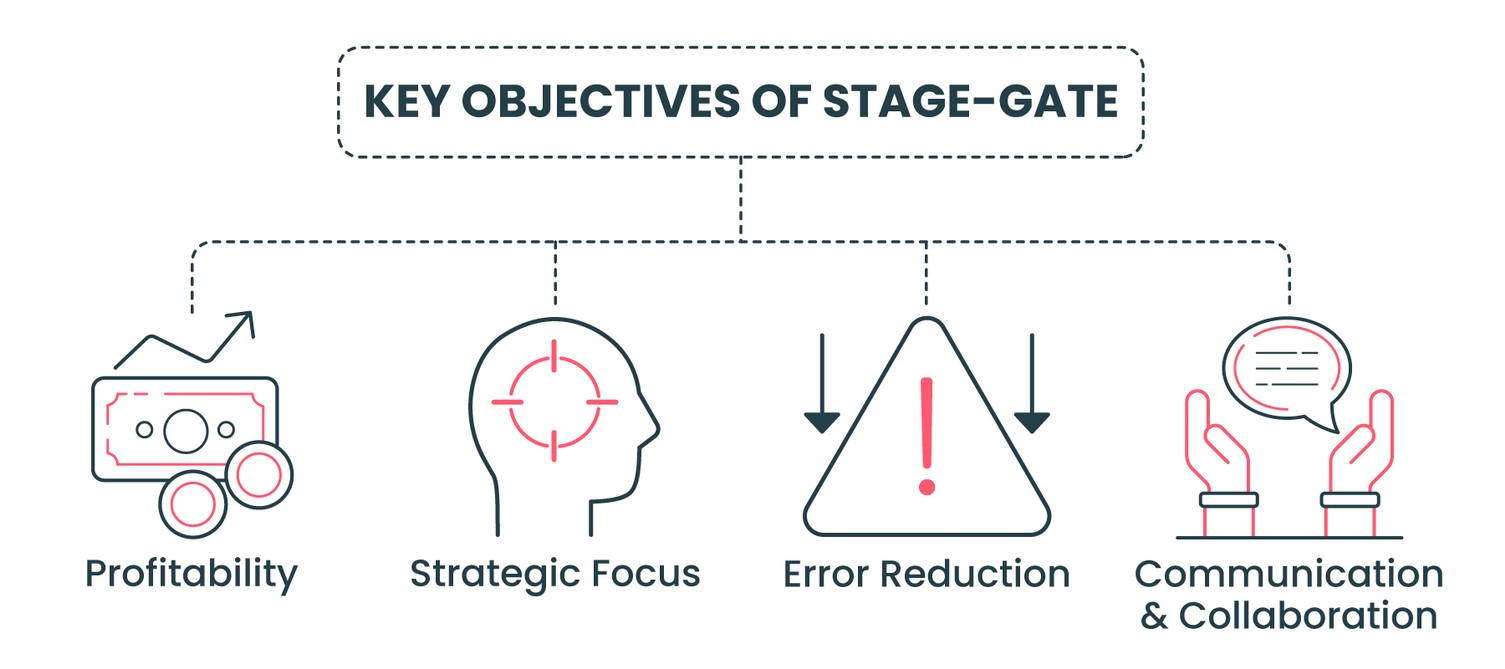
The Stage-Gate methodology is designed to achieve several critical objectives:
- Profitability: By facilitating quicker time-to-market and more productive project cycles, Stage-Gate enhances profitability. According to Stage-Gate International, 63-78 percent of businesses using Stage-Gate achieve their profitability objectives.
- Strategic focus: It ensures organisations undertake the right projects and optimise their new product development pipeline.
- Error reduction: Clear deliverables and gate criteria minimise errors, risks, and resource wastage.
- Communication and collaboration: The process fosters effective cross-functional communication and collaboration, driving organisational culture change.
How to implement the Stage-Gate methodology effectively
Implementing the Stage-Gate methodology effectively is crucial for organisations seeking to streamline their project and product management processes. The methodology includes several key elements, including distinct stages, customization options, and gate reviews. Let's delve deeper into these aspects to understand how to implement Stage-Gate successfully.
The stages of Stage-Gate
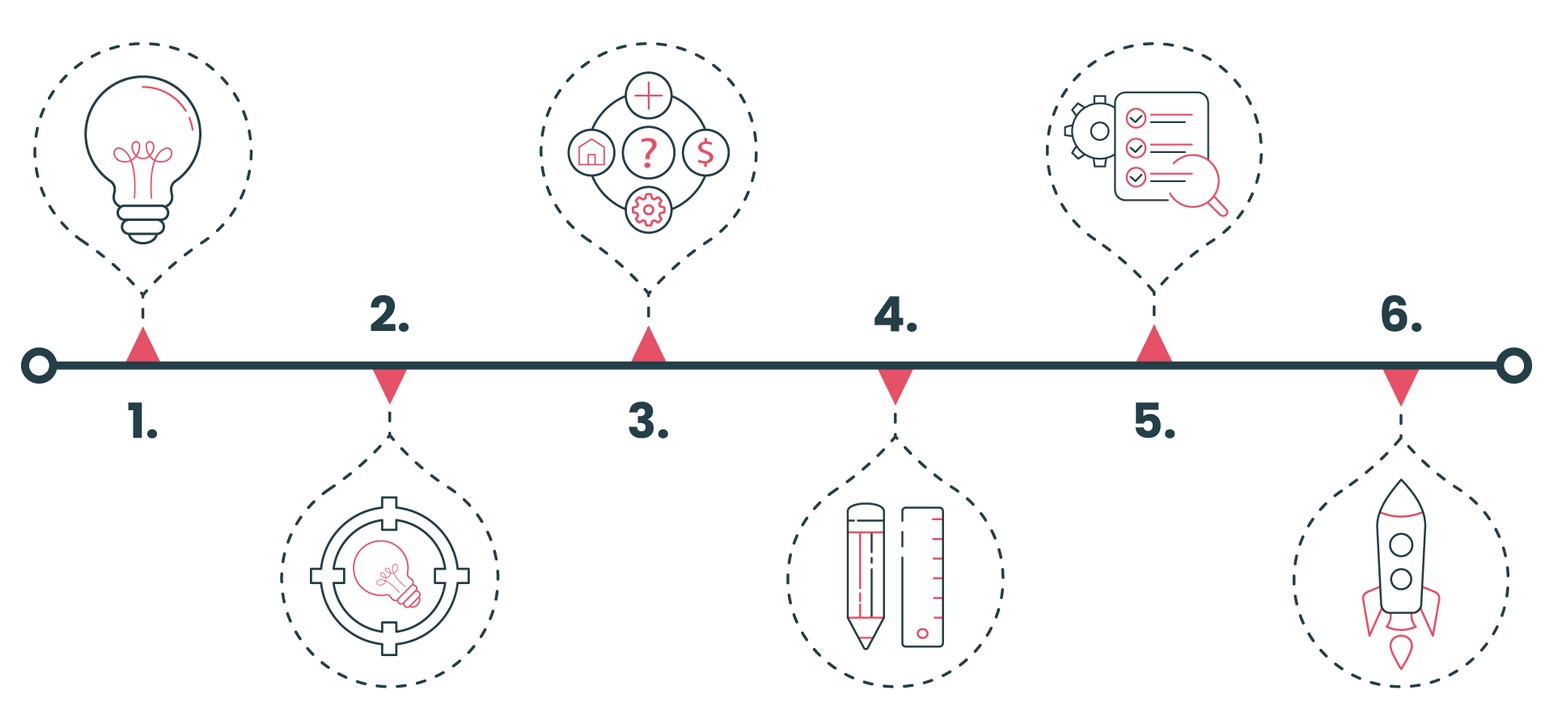
The Stage-Gate process is structured into multiple stages, each serving a specific purpose in the project or product development journey. These stages are as follows:
- Ideation: This initial stage is all about generating ideas and identifying potential projects. It's where the creative sparks fly as teams brainstorm solutions to existing problems or explore new opportunities.
- Scoping: Once ideas are generated, the Scoping phase involves gathering more information and conducting preliminary research. This stage helps determine the feasibility of the proposed projects and assesses their potential value.
- Building the business case and plan: In this stage, organisations build a robust business case for the selected project. This case outlines the rationale for pursuing the project, including user needs, market size, technical feasibility, and cost analysis. A detailed project plan is also developed, complete with tasks, timelines, and resource allocation.
- Product development: With a solid plan, the project moves into the development phase. This is where the product or project takes shape, and cross-functional teams collaborate to bring the concept to reality. Marketing plans are also developed during this phase.
- Testing and validation: Rigorous testing and validation are essential before launching the product into the market. Near testing, field testing (or beta testing), and market testing help identify and address any issues, ensuring that the product meets customer needs and expectations.
- Product launch and marketing: The final stage involves the actual product launch. Pricing, distribution channels, production policies, and marketing strategies are established. Post-launch reviews are conducted to evaluate the project's success and gather user feedback.
Customization for your needs
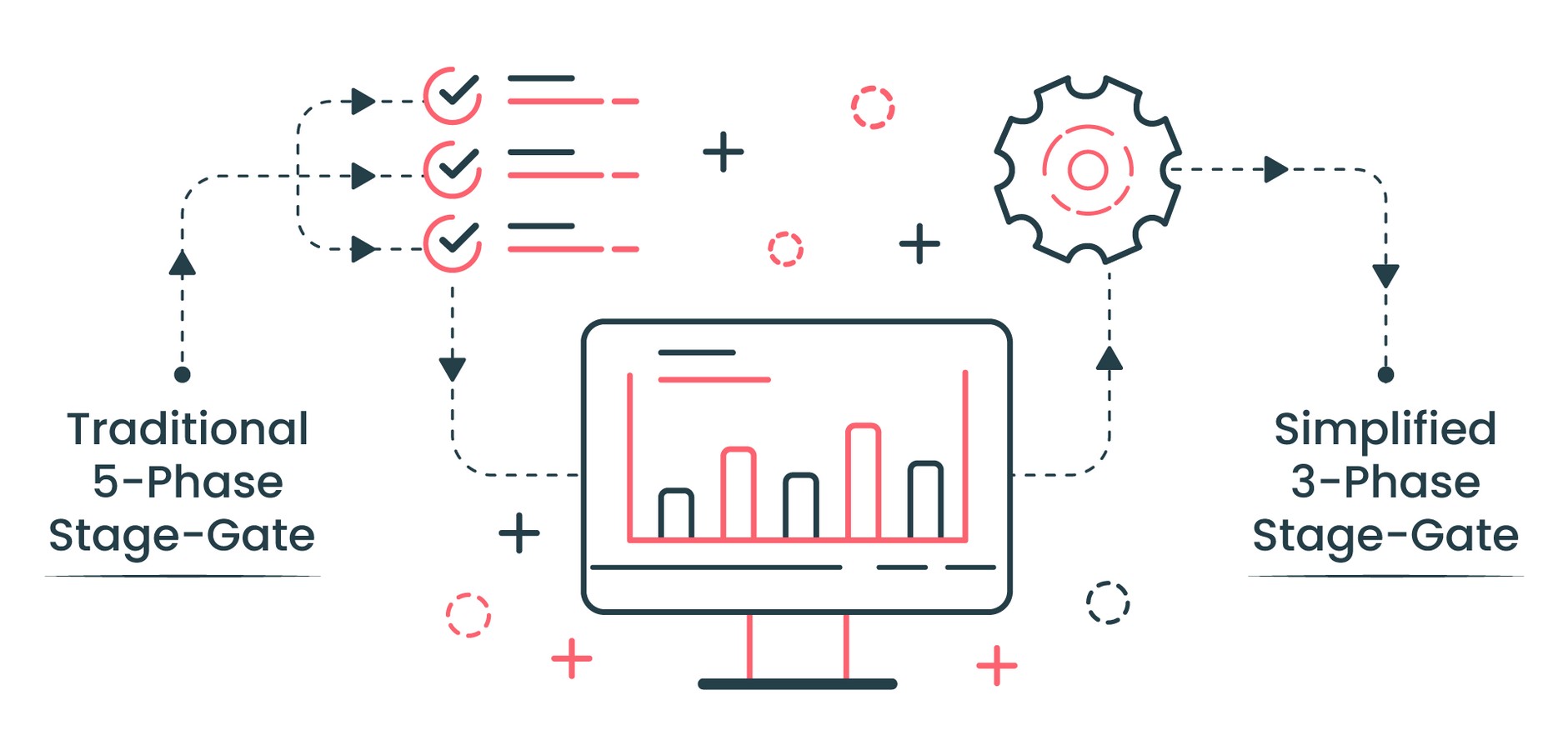
One of the standout features of Stage-Gate is its flexibility. Organisations can tailor the methodology to align with their specific project requirements. This adaptability ensures that Stage-Gate can be effectively implemented across projects of varying sizes and complexities.
For example, organisations can opt for a simplified three-phase version of Stage-Gate for smaller projects with straightforward objectives. This condensed approach combines stages like Scoping and Building the Business Case into a single phase. It streamlines the process while still adhering to the fundamental principles of the methodology.
On the other hand, organisations may follow the traditional five-phase Stage-Gate approach for larger and more complex projects. This comprehensive model allows for a more in-depth exploration of each project aspect, making it suitable for initiatives that demand thorough analysis and planning.
The key is to strike a balance between the level of detail and the project's specific needs. Organisations can optimise their project management efforts and achieve the desired outcomes by customizing the Stage-Gate process.
The role of gate reviews
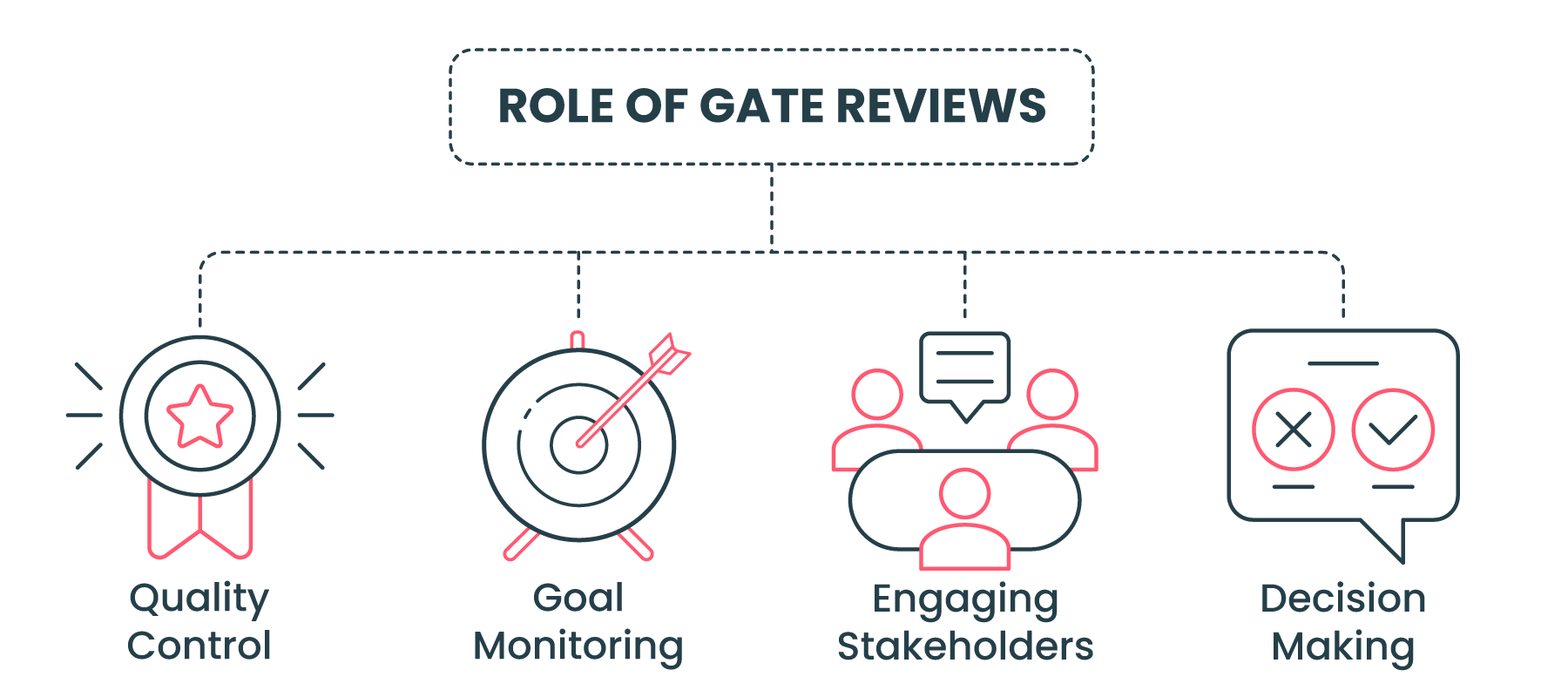
Gate reviews are integral to the Stage-Gate methodology, serving as critical checkpoints in the project's journey. These reviews play several vital roles:
- Assessing project quality: Gate reviews provide a formal mechanism for assessing the quality of the project's deliverables and outcomes. This evaluation ensures that the project aligns with predefined objectives and meets required standards.
- Monitoring scope changes: Gate reviews help monitor changes in project scope. Any deviations from the original project scope can be identified and addressed promptly, preventing scope creep and potential issues.
- Engaging stakeholders: Gate reviews are collaborative events involving key stakeholders, including project teams, decision-makers, sponsors, and subject matter experts. Engaging these stakeholders ensures that decisions are well-informed and supported by diverse perspectives.
- Decision-making: A pivotal decision is made regarding the project's trajectory at each gate. This decision may involve proceeding to the next phase, temporarily halting the project for adjustments, making necessary changes, or even terminating the project if it no longer aligns with organisational goals.
Gate reviews serve as a project's "green light" to move forward or a "red light" to halt and reassess. They provide a structured decision-making and risk management approach throughout the project's lifecycle.
Best practices for implementing Stage-Gate
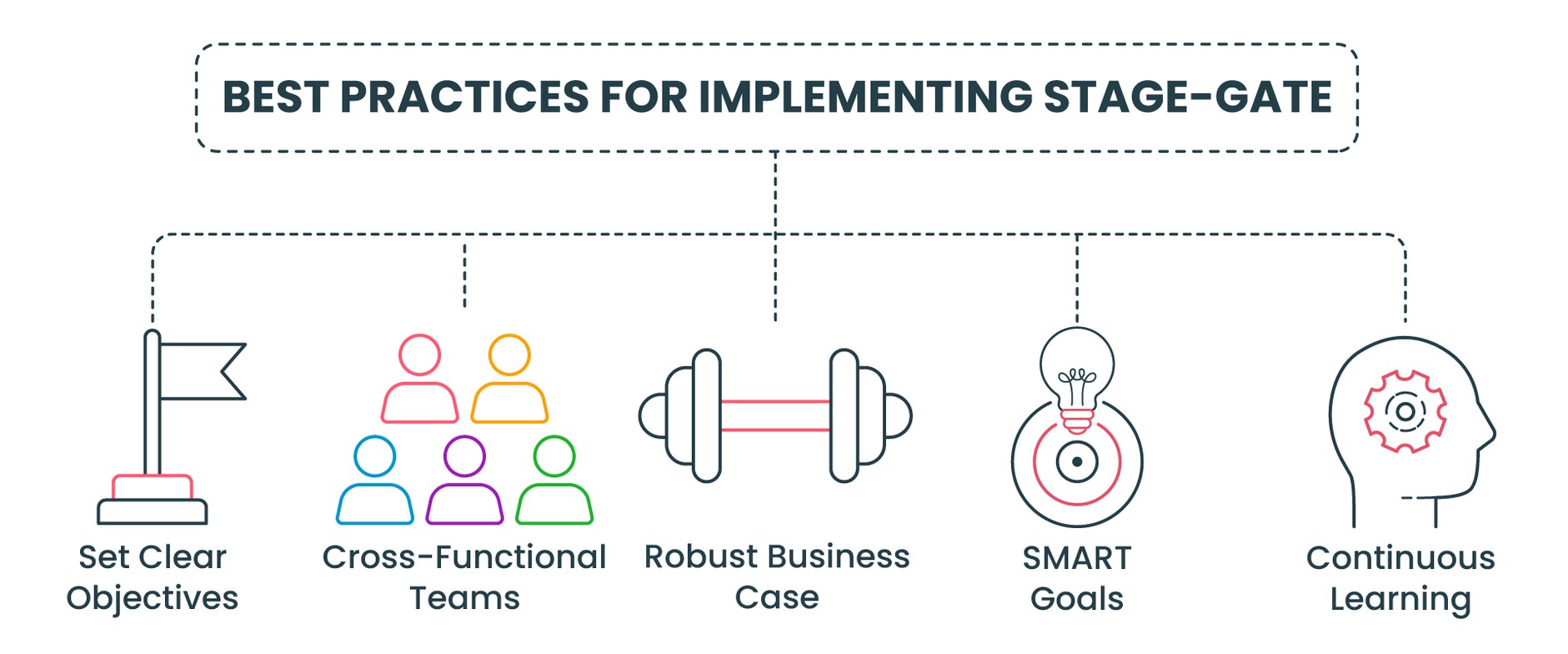
- Setting clear objectives: Start with well-defined project objectives and deliverables for each phase to ensure alignment with organisational goals.
- Cross-functional teams: Encourage collaboration among cross-functional teams throughout the process to gather diverse perspectives and insights.
- Robust business case: Develop a strong business case that justifies the project, addressing user needs, market size, technical feasibility, and cost analysis.
- SMART goals: Govern project development with SMART goals (Specific, Measurable, Actionable, Realistic, Time-bound) to maintain focus and accountability.
- Continuous learning: Embrace a culture of continuous learning and process improvement by conducting post-launch reviews to gather feedback and identify areas for enhancement.
How Stage-Gate software supports the process
Stage-Gate software enhances the traditional Stage-Gate methodology by automating and simplifying many of its components, ensuring smoother transitions between stages and more informed decision-making at each gate. Here's how effective Stage-Gate software supports this process:
- Streamlined workflow management: The software ensures every phase of the Stage-Gate process is clearly mapped out, providing teams with customizable workflows tailored to the specific needs of each project.
- Real-time collaboration: Teams can communicate more efficiently using integrated collaboration tools within the software, which facilitates the sharing of insights and feedback throughout the project lifecycle. This helps ensure alignment before every gate review.
- Automated gate reviews: With built-in templates and reminders, Stage-Gate software standardizes gate reviews, allowing teams to evaluate project progress with precision. This reduces delays and enhances the speed of decision-making.
- Resource and budget tracking: The software enables real-time tracking of resources and budgets, giving stakeholders the tools they need to monitor performance against key metrics and make adjustments as necessary.
- Risk management: By identifying and tracking risks early on, Stage-Gate software helps teams mitigate potential issues before they impact project outcomes. This proactive risk management ensures smoother project progression.
- Data-driven decisions: Stage-Gate software offers advanced reporting and analytics, providing stakeholders with the data needed to make informed decisions. This real-time visibility into project performance helps improve outcomes and optimize processes.
By leveraging Stage-Gate software, organizations can enhance collaboration, optimize resource management, and make smarter, data-driven decisions, leading to faster, more successful project outcomes.
Real-world examples of Stage-Gate success
Procter & Gamble (P&G): P&G, a consumer goods giant, credits its innovation success to the Stage-Gate process. By systematically evaluating projects and optimising their product development pipeline, P&G consistently delivers successful products to the market.
General Electric (GE): GE employs the Stage-Gate methodology to manage its diverse range of projects, from aviation to healthcare. It allows GE to allocate resources effectively and make informed decisions at each gate, ensuring project success.
Benefits of embracing Stage-Gate
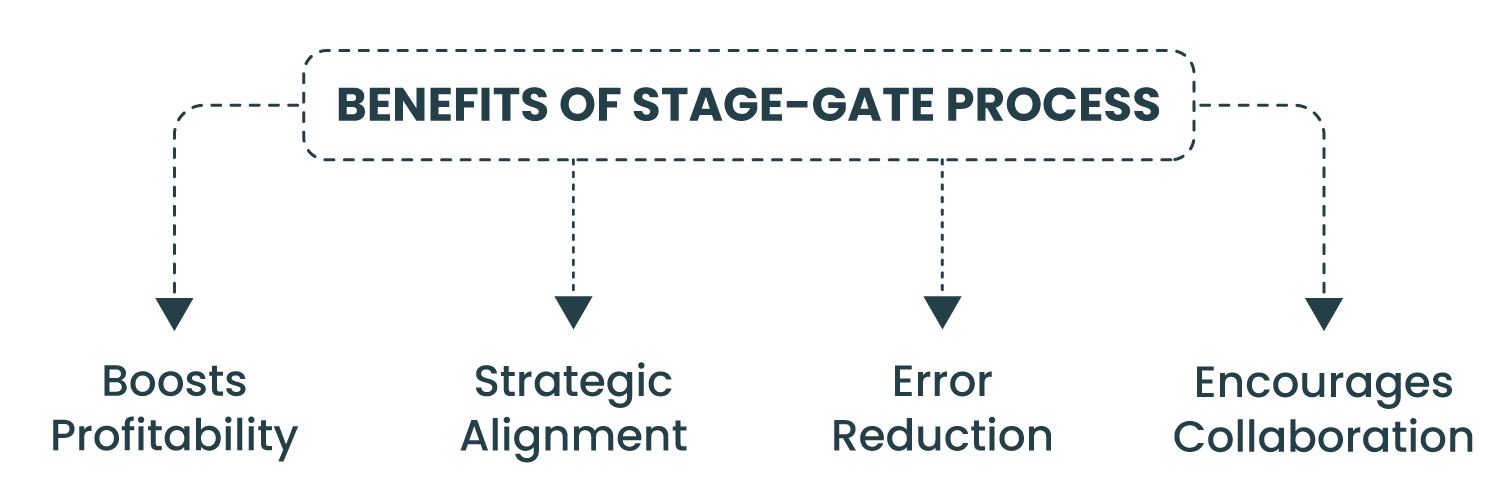
The Stage-Gate process brings numerous advantages to organisations. It accelerates time-to-market and boosts project productivity, ultimately increasing profitability.
Moreover, it ensures that projects align with strategic objectives, optimising resource allocation. Clearly defining deliverables and gate criteria at each stage minimises errors, risks, and resource wastage.
Additionally, Stage-Gate encourages effective cross-functional communication and collaboration, fostering a culture of teamwork within organisations.
In short, the process enhances profitability, strategic alignment, error reduction, and collaboration, making it a valuable approach for organisations aiming to improve project management and overall efficiency.
Conclusion
The Stage-Gate process is a powerful methodology that can significantly enhance project and product management, driving increased ROI and productivity. By breaking projects into manageable phases with gate reviews, organisations can make informed decisions, reduce risks, and ensure successful project outcomes. Embracing the best practices of Stage-Gate and learning from real-world examples can propel your organisation to new heights of innovation and efficiency.
Are you ready to unlock the potential of the Stage-Gate process and drive your organisation's success?
Empowering your Stage-Gate process with Cerri Project
When it comes to effectively managing the Stage-Gate process, having the right tools is essential. Cerri Project Stage-Gate Software offers robust project management capabilities specifically designed to support the Stage-Gate methodology. With customizable workflows, real-time collaboration features, and comprehensive gate review templates, Cerri Project enables teams to efficiently move through each stage while ensuring alignment with business goals. By integrating resource and risk management tools, Cerri Project not only streamlines the process but also empowers data-driven decision-making at every gate.
FAQs
What is the difference between Stage-Gate and Phase-Gate? While Stage-Gate and Phase-Gate are often used interchangeably, they refer to the same structured project management methodology. The process involves breaking down projects into stages (or phases) and conducting gate reviews at the end of each stage to assess project progress.
How does Stage-Gate drive innovation in organisations? Stage-Gate fosters innovation by providing a systematic approach to idea generation, evaluation, and development. It encourages cross-functional collaboration, ensures project alignment with strategic goals, and promotes a culture of continuous learning and improvement.
Can Stage-Gate be customised for different types of projects? Yes, Stage-Gate is highly adaptable. Organisations can customise the process to suit the specific requirements of different projects. Smaller projects may follow a simplified version, while larger and more complex initiatives can adhere to the traditional five-phase approach.
What are the key benefits of implementing the Stage-Gate methodology? Implementing Stage-Gate offers several benefits, including increased profitability, strategic alignment, error reduction, improved communication and collaboration, and enhanced project management efficiency.
Are there any industries where Stage-Gate is particularly effective? Stage-Gate is versatile and can be applied across various industries, including manufacturing, healthcare, technology, and consumer goods. It is particularly effective in industries that require structured project management for innovation and product development.
How useful was this article?
Get enterprise PM insights, no noise
A bi-monthly briefing on Stage-Gate governance, portfolio management, and enterprise delivery best practices.
No spam. Unsubscribe anytime.
Prefer video? Watch on YouTube
Walkthroughs, Stage-Gate demos, and manufacturing PM best practices on our channel.