Project managers are essential to ensuring complex projects run smoothly and reach successful outcomes. This guide explores their responsibilities, skills, impact on team dynamics, and how technology is reshaping their roles in the digital age.
Project managers are essential, actively ensuring complex projects' smooth and efficient completion, leading them to successful outcomes.
In this guide, we will explore the essential responsibilities of project managers, delve into their skills and qualities, examine their impact on team dynamics, and assess how technology is reshaping their roles in the digital age.
Whether you're an aspiring project manager or someone curious about their vital role, this comprehensive guide will uncover the pivotal contributions of project managers in today's dynamic business landscape.
Defining the role of project managers
The backbone of project success
Project managers are the driving force behind the successful execution of projects across various industries. They are the backbone, ensuring that projects are completed on time, within budget, and meet the desired objectives. Their responsibilities encompass various tasks, making them instrumental in the project's overall success.
A multifaceted role
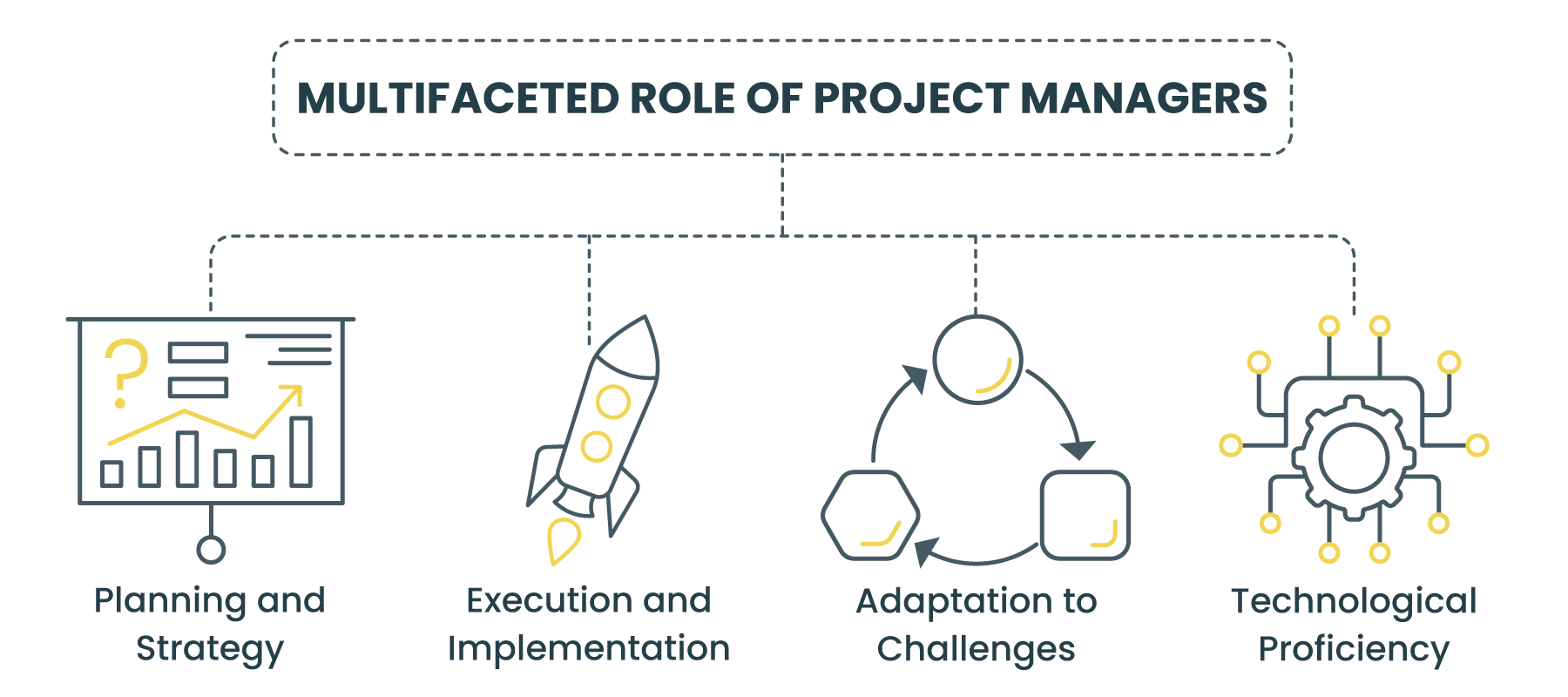
The role of a project manager can vary depending on the industry and the specific project they oversee. However, their core responsibilities can be summarised as follows:
1. Planning and strategy
Project managers are responsible for creating a comprehensive project plan, which includes defining goals, objectives, timelines, and resource allocation. They are the project's architects, setting the foundation for its success.
2. Execution and implementation
Once the plan is in place, project managers lead the execution phase. They coordinate team members, monitor progress, and ensure that tasks are completed as per the schedule.
3. Adaptation to challenges
Challenges are inevitable in the dynamic world of project management. Effective project managers are adept at identifying and addressing issues promptly. Their ability to adapt to unexpected hurdles is crucial in keeping the project on track.
4. Technological proficiency
Project managers must be technologically proficient in the digital age transforming industries. They use software solutions to streamline processes, improve communication, and enhance project monitoring.
The importance of effective project managers
Effective project managers are the architects of project success. Their impact extends far beyond simply meeting deadlines and budgets. Here's why their role is indispensable:
1. Maintaining team morale and dynamics
Project managers are not just taskmasters; they are also team leaders. They play a pivotal role in maintaining team morale and dynamics. By fostering a positive work environment, they ensure that team members remain motivated and productive throughout the project.
2. Ensuring accountability
One of the key jobs of a project manager is to assign responsibilities and ensure accountability. This helps prevent bottlenecks and conflicts within the team, allowing for a smoother workflow.
3. Effective communication
Effective communication is the cornerstone of project success. Project managers act as communication hubs, ensuring all team members are on the same page. They bridge the gap between stakeholders, clients, and the project team, ensuring everyone's needs are met.
Skills and qualities of effective project managers
Certain skills and qualities are essential to excel as a project manager. Here are the key attributes that set effective project managers apart:

Leadership skills
Project managers must lead by example. They inspire and motivate their teams, fostering a culture of collaboration and excellence. Leadership skills are pivotal in steering a project toward success.

Time management
Time is of the essence in project management. Effective project managers manage their time and resources efficiently, ensuring deadlines are met without compromising quality.

Problem-solving abilities
Challenges are an inherent part of any project. Effective project managers are skilled problem solvers who can think critically and make informed decisions under pressure.

Communication skills
Clear and effective communication is paramount. Project managers must be able to convey information, expectations, and updates to team members and stakeholders concisely and understandably.

Risk assessment and mitigation
Identifying potential risks and developing strategies to mitigate them is a vital skill. Effective project managers are proactive in minimising risks that could derail the project.

Flexibility and adaptability
In a rapidly changing business landscape, adaptability is key. Effective project managers can pivot and adjust their strategies as circumstances evolve.

The role of technology in project management
Shaping the future
The digital age has transformed the landscape of project management. Technology has become an integral part of a project manager's toolkit, enhancing their effectiveness in various ways.
Streamlining processes
Project management software solutions have streamlined the planning and execution phases of projects. These tools allow project managers to create detailed project plans, allocate resources efficiently, and track progress in real-time.
Data-driven decision-making
Technology provides project managers with access to vast amounts of data. This data can be analysed to make informed decisions, identify trends, and optimise project processes.
Remote project management
The rise of remote work has made it necessary for project managers to adapt. Technology enables them to effectively manage projects with team members across different locations, ensuring seamless collaboration.
The evolution of the project manager role
The role of project managers has evolved significantly over the years, primarily due to advancements in technology and changes in business practices.
- From traditional to digital: In the past, project managers relied heavily on manual processes and documentation. With the advent of project management software, their roles have become more streamlined and data-driven.
- Agile project management: The agile methodology has gained prominence, emphasising flexibility, collaboration, and iterative development. Project managers have had to adapt to this approach, focusing on delivering value to clients through continuous improvement.
- Hybrid project management: In today's landscape, project managers often work on hybrid projects that combine traditional and agile approaches. They must be versatile enough to navigate these complex projects effectively.
The future of project management
As we look to the future, the role of project managers will continue to evolve. Project managers will have to embrace new technologies and methodologies to remain relevant and successful.

Artificial intelligence and automation
Artificial intelligence (AI) and automation are poised to play a significant role in project management. These technologies will assist in resource allocation, risk assessment, and data analysis, allowing project managers to focus more on strategic decision-making.

Sustainability and environmental concerns
With an increasing emphasis on sustainability and environmental concerns, project managers will need to incorporate eco-friendly practices into their projects. This will include managing resources efficiently and minimising waste.

Soft skills and emotional intelligence
While technology plays a crucial role, soft skills, and emotional intelligence cannot be overstated. Project managers will need to excel in team management, conflict resolution, and client relations.

Continuous learning
Continuous learning will be vital in the rapidly evolving landscape of project management. To remain effective, project managers will need to stay updated on the latest trends, technologies, and methodologies.
Conclusion
Project managers play a key role in successfully executing projects of various sizes and complexities. Their multifaceted role involves planning, execution, adaptation to challenges, and technological proficiency. Effective project managers possess leadership skills, time management abilities, problem-solving capabilities, and practical communication skills.
Technology has transformed project management, enhancing communication, streamlining processes, and enabling data-driven decision-making. The role of project managers has evolved in the digital age, embracing agile and hybrid methodologies.
Looking ahead, project managers must stay adaptable, embrace technology, and focus on sustainability to navigate the future landscape of project management successfully.
As they continue to unlock project potential, project managers will remain integral to the success of businesses worldwide.
How useful was this article?
Get enterprise PM insights, no noise
A bi-monthly briefing on Stage-Gate governance, portfolio management, and enterprise delivery best practices.
No spam. Unsubscribe anytime.
Prefer video? Watch on YouTube
Walkthroughs, Stage-Gate demos, and manufacturing PM best practices on our channel.