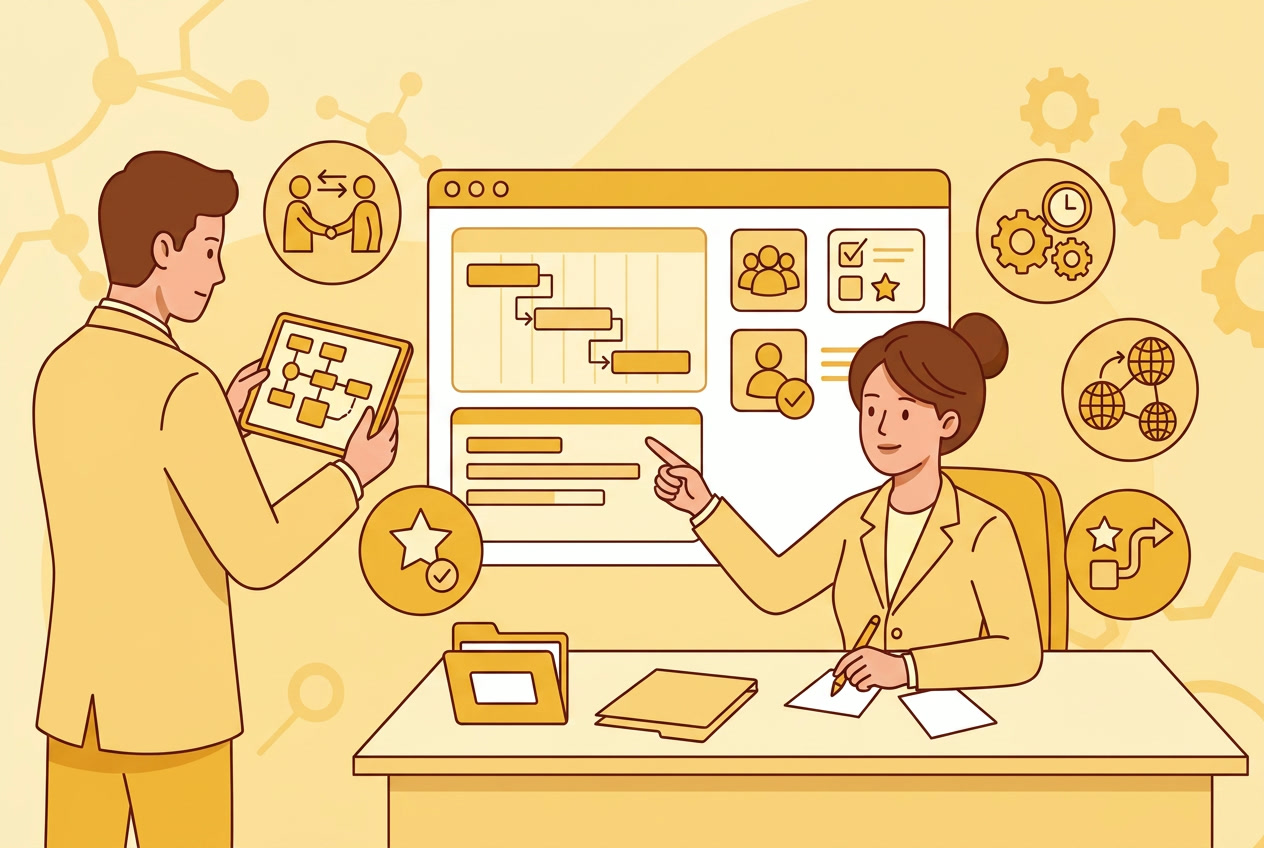
Enterprise project management software connects planning and execution with resources, financials, governance, reporting, and cross-project visibility.
Introduction
Managing a handful of projects is one thing. Managing projects across an entire organization is something else entirely.
As project activity grows, complexity rarely comes from any single schedule or task list. Projects start competing for the same people. Budgets span departments. Dependencies cross teams and systems. Different business units develop their own processes, while leadership still expects one reliable view of progress, cost, risk, and priorities across the organization.
This is the point where basic project management tools stop being enough.
Enterprise project management software is built for that level of complexity. It connects project planning and execution with resources, financials, governance, reporting, and cross-project visibility, so organizations can manage work consistently without losing control as they scale.
This guide covers what enterprise project management software is, when organizations need it, the capabilities that matter most, how it differs from related tools, and what to look for when choosing a platform.
1. What Is Enterprise Project Management Software?
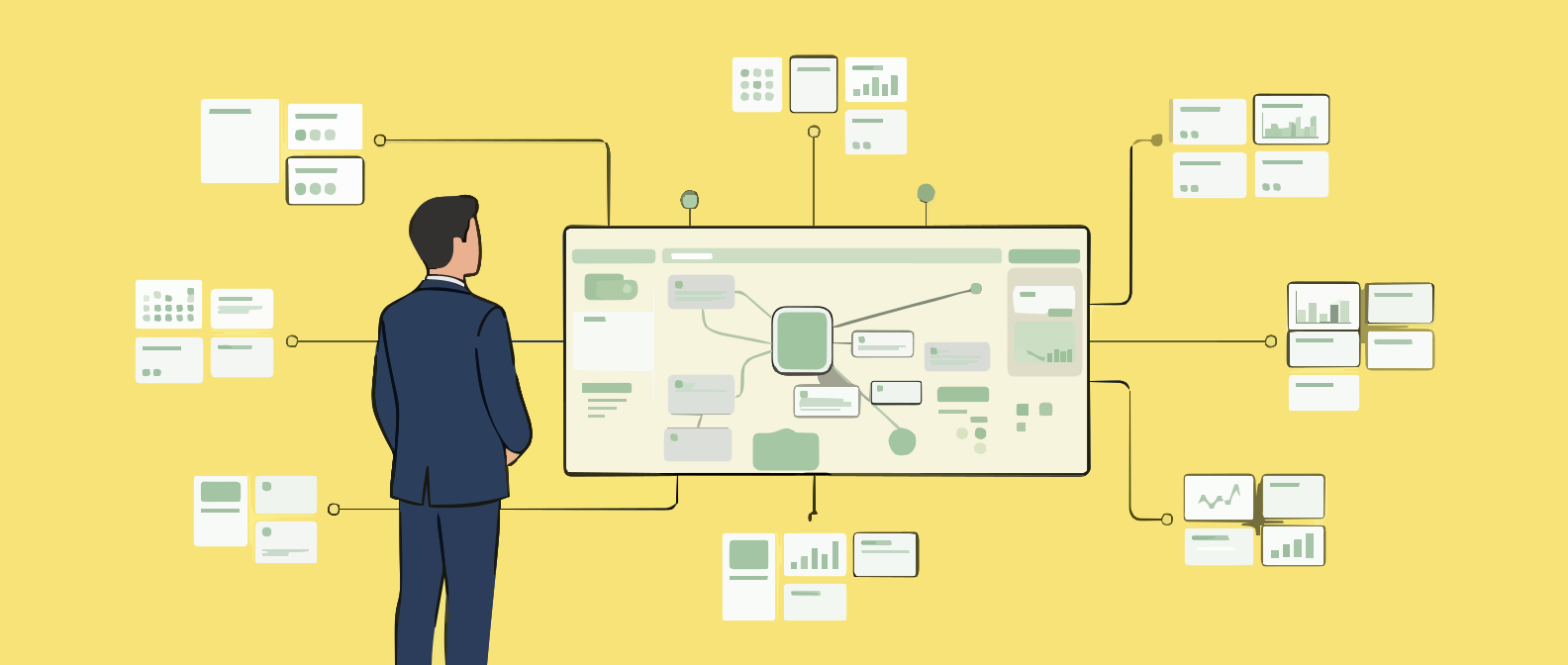
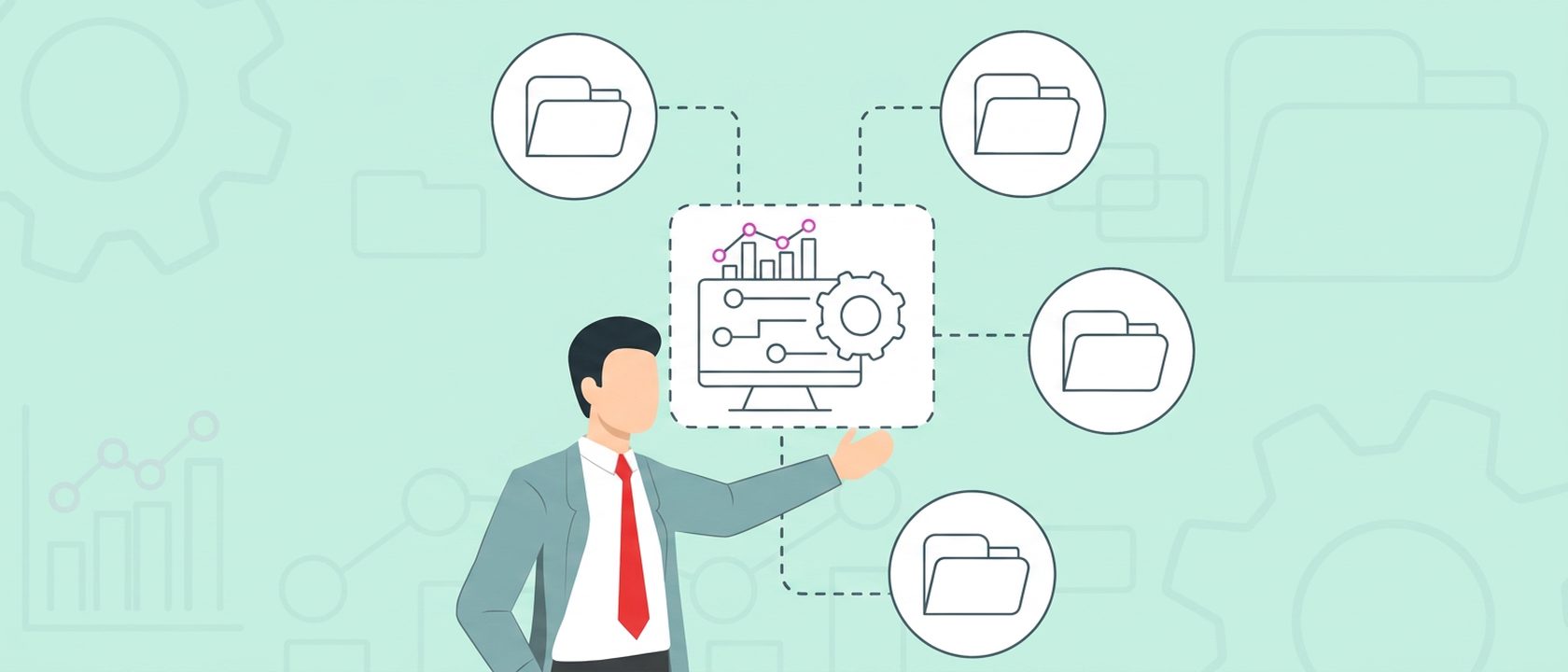
Enterprise project management software is a centralized system for planning, executing, governing, and monitoring projects across multiple teams, departments, and business units.
Unlike basic project management tools, which focus mainly on tasks, deadlines, and team collaboration, enterprise systems support the broader structures complex project environments need: shared resources, financial control, standardized workflows, approvals, portfolio visibility, security, reporting, and integration with other business systems.
The goal isn't to manage more projects. It's to create a consistent environment where project information, processes, and decisions stay connected across the organization.
That distinction also helps separate three terms that get used interchangeably.
Enterprise Project Management (EPM) is the organizational discipline of managing projects consistently across the enterprise. Enterprise project management software is the technology that supports that discipline.
Project Portfolio Management (PPM) sits at a different decision level, focused on which initiatives should be selected, prioritized, funded, resourced, or reconsidered across a portfolio. Enterprise project management reaches further, into how approved projects are planned, controlled, and executed.
An Enterprise Project Management Office (EPMO), meanwhile, is an organizational function that may establish standards, governance, reporting, and portfolio oversight. An EPMO often relies on enterprise project management software, but the two aren't the same thing.
Organizations don't need a formal EPMO before enterprise software becomes useful, either. The real trigger is project complexity.
2. Why Standard Project Management Tools Stop Working at Enterprise Scale
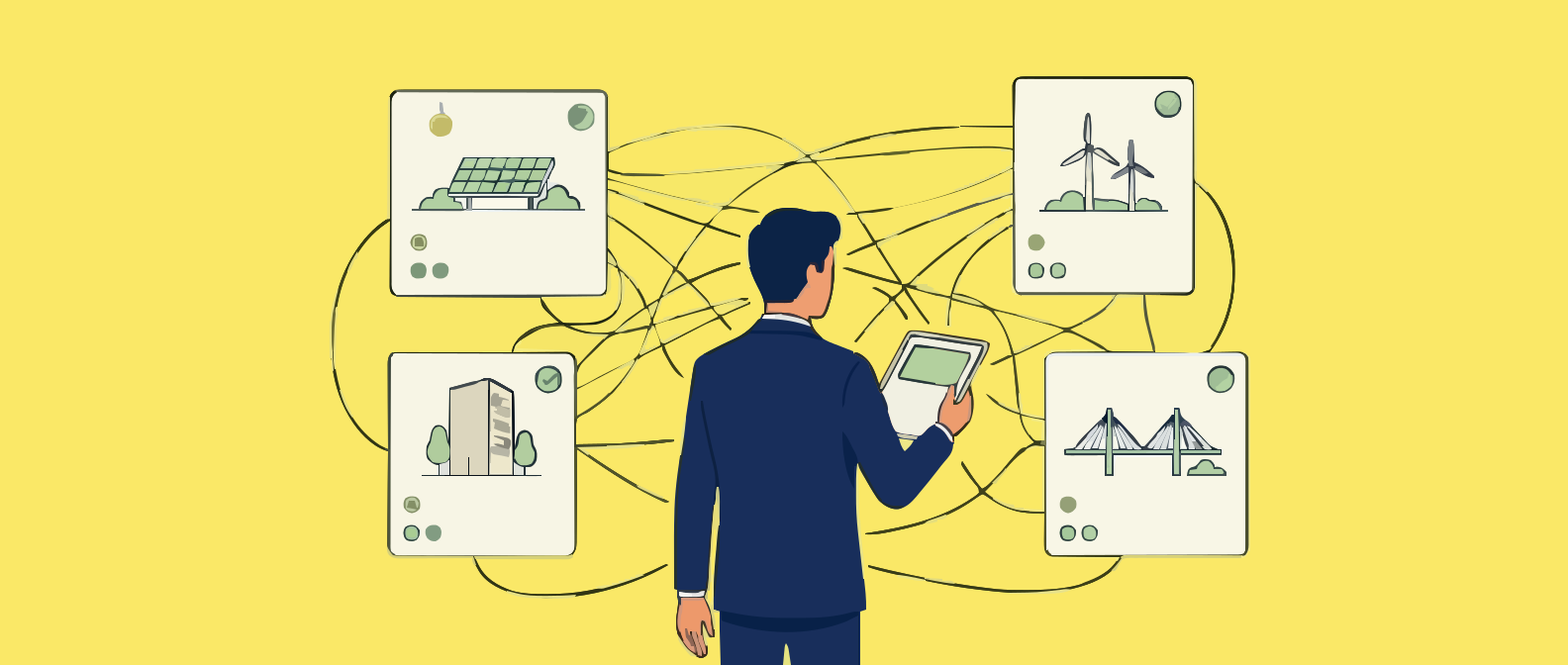
The fundamentals of project management don't change at enterprise level. Teams still need to define scope, build schedules, manage risk, assign responsibility, track cost, and deliver outcomes.
What changes is the number of interactions between projects.
A project manager can build a perfectly realistic plan for one initiative while another project manager builds an equally realistic plan elsewhere. Both plans can still fail if they depend on the same specialist, the same budget, the same equipment, or the same decision-maker.
That's where local project management starts to break down.
As organizations scale, a familiar set of warning signs tends to show up together: resources allocated independently across projects, reporting that requires manual consolidation, project financials tracked separately from execution, key decisions happening in email or meetings instead of the system of record, and different departments using different definitions for status, milestones, risk, or progress.
Each process might still work on its own. The problem is that the organization no longer has one reliable, shared view.
Tools follow the same pattern: one system for tasks, another for documents, spreadsheets for budgets, chat for communication, and resource planning somewhere else entirely. Each tool solves a local problem, but together they create fragmented project data and incomplete visibility.
Enterprise project management software becomes relevant once coordination alone isn't enough and the organization needs a common structure for execution.
This isn't purely a function of company size. A relatively small organization running highly regulated, capital-intensive, or cross-functional projects may need more control than a much larger company whose projects are mostly simple and independent.
So, the real question isn't “Are we a large enterprise?”
It's “Has our project environment become too interconnected to manage reliably through separate tools and local processes?”
3. The Benefits of Enterprise Project Management Software
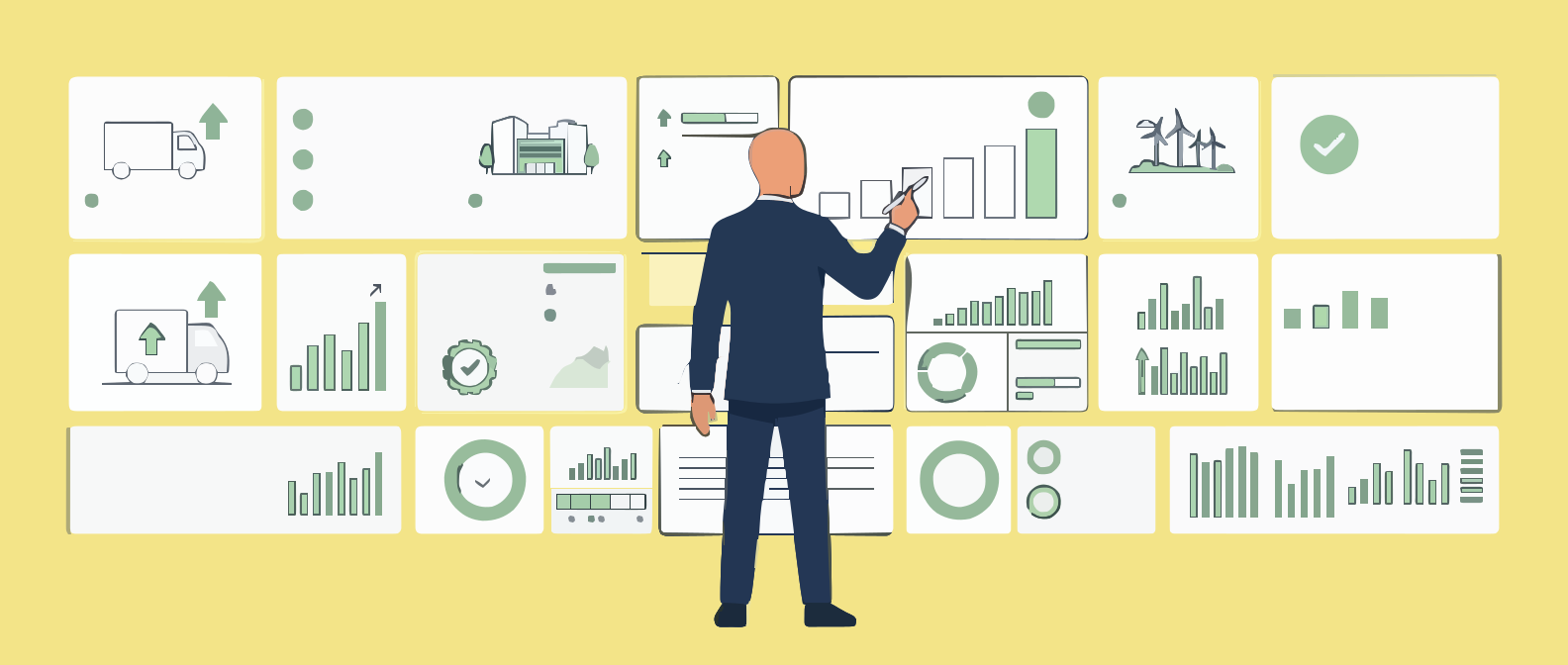
The main benefit of enterprise project management software isn't a longer feature list. It's the ability to connect information and decisions that would otherwise stay fragmented.
Project visibility is usually the clearest improvement. When schedules, budgets, resources, risks, documents, and approvals sit in separate systems, managers spend real time reconstructing what's actually happening. Reports become after-the-fact snapshots instead of a current view of execution.
A shared project environment changes that. Teams keep working within their own responsibilities, but key information feeds into one common system. Leadership can see where projects are slipping, which initiatives compete for the same resources, where costs are drifting from plan, and which decisions need attention now.
Resource management improves for the same reason. Resource conflicts are hard to manage when projects are planned independently - a person who looks available on one project may already be committed elsewhere. Enterprise visibility surfaces those competing demands before they become delivery problems.
Financial control benefits too. Changes in scope, schedule, or resource demand almost always carry a financial consequence. When project execution and financial information are connected, organizations understand those consequences earlier, rather than waiting for the next reporting cycle.
Governance also becomes more consistent. Approval workflows, decision points, change controls, and reporting standards can be built directly into project processes instead of managed through informal workarounds.
That doesn't mean every project has to follow the exact same methodology. Different project types can legitimately need different lifecycles. The value comes from standardizing where consistency matters and staying flexible where it doesn't.
Ultimately, better visibility and structure improve the quality of decision-making. Teams spend less time reconciling information, and managers can focus on trade-offs, risk, priorities, and action.
4. Core Capabilities of Enterprise Project Management Software
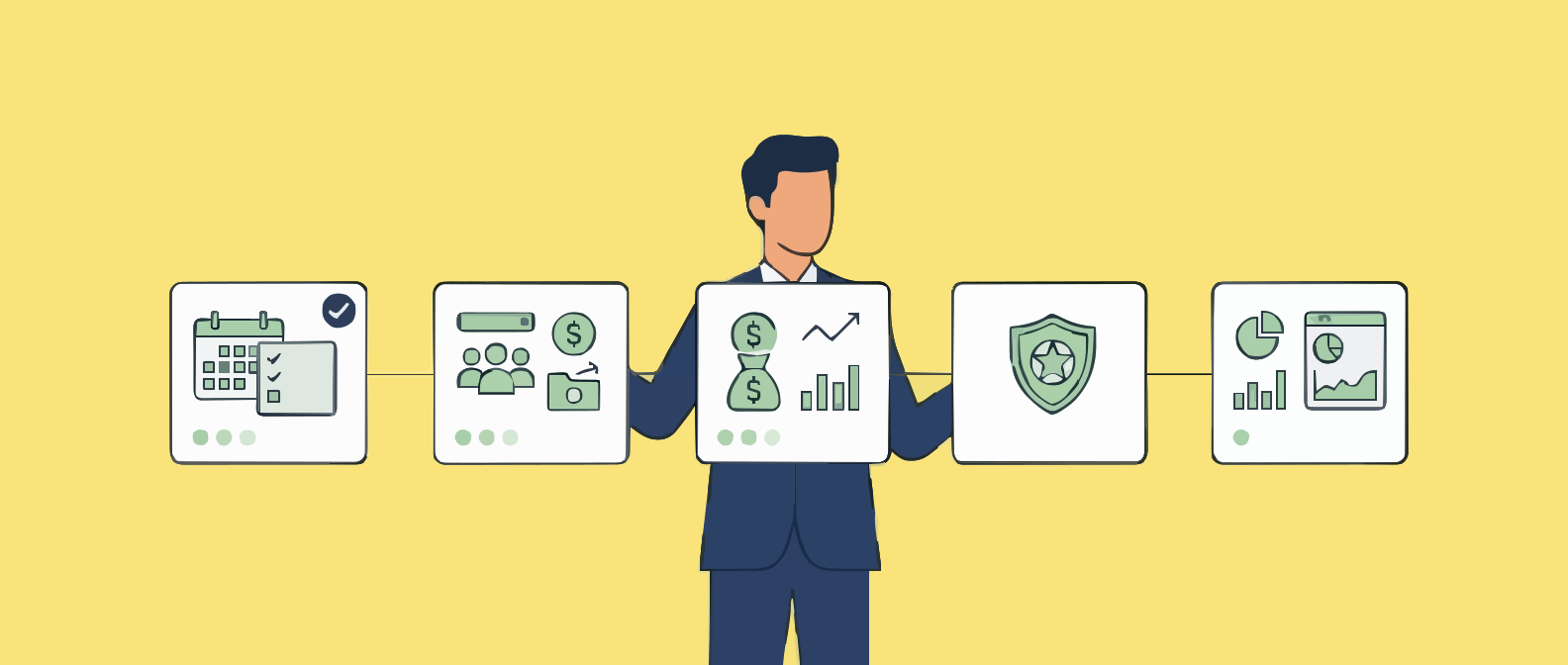
Enterprise project management systems vary considerably, but a few capabilities consistently matter as projects get more complex.
Project Planning and Execution
Planning is still the foundation.
Enterprise software needs to support detailed schedules, milestones, dependencies, responsibilities, risks, issues, and progress tracking without forcing project managers to maintain parallel systems.
As projects get larger or longer, the ability to manage baselines, interdependencies, multiple workstreams, and change over time becomes increasingly important.
The goal isn't to make planning more complicated - it's to keep the plan usable as the project itself gets more complicated.
Resource and Capacity Management
Enterprise project environments run on shared people, roles, and skills.
Resource management needs to go beyond assigning individuals to tasks. Organizations need to see how resources are allocated across projects, when skills are actually available, where demand exceeds supply, and how future initiatives will affect existing commitments.
Capacity management adds an earlier question: can the organization realistically take on this work at all?
Together, resource and capacity management help organizations shift from reactive workload balancing to deliberate planning and prioritization.
Financial Control
For many enterprise projects, delivery can't be separated from financial performance.
Software needs to connect project budgets, forecasts, actual costs, labor effort, cost categories, and planned-versus-actual expenditure directly to the project itself.
This matters most for capital-intensive projects, long-running programs, and environments where cost control is part of formal project governance.
Financial data is most useful when managers can read it alongside schedule, resources, risk, and progress, rather than as a separate reporting layer.
Governance and Workflow Management
Not every project can move informally from planning to completion.
Product development, capital investment, pharmaceutical programs, regulated initiatives, and large enterprise projects often require structured approvals and decision points before work can progress.
Enterprise project management software supports these requirements through configurable lifecycles, formal approval workflows, required deliverables, change control, escalation paths, and traceable decision records.
For organizations using Stage-Gate or other phase-based governance approaches, the advantage is that gate reviews stay connected to current project information instead of running as a separate administrative process.
Visibility, Reporting, and Integration
Different stakeholders need different views of the same project environment.
Project managers need detailed schedule information. Resource managers need demand and availability. Finance needs budget and forecast data. Executives need exceptions, risks, and decisions that require attention.
An enterprise project management system should deliver all these views without creating separate versions of the truth.
In more controlled environments, this visibility also extends to documents, approvals, and decision history, ensuring that project information remains traceable over time.
It also must fit within the broader business environment. Integrations with ERP, finance, identity, collaboration, and development systems often become essential at enterprise scale, along with role-based permissions, APIs, auditability, and the right deployment options.
These capabilities rarely show up in a simple feature comparison, but they often determine whether a project management system can actually function across an organization.
5. Enterprise Project Management, PPM, and Work Management: What's the Difference?
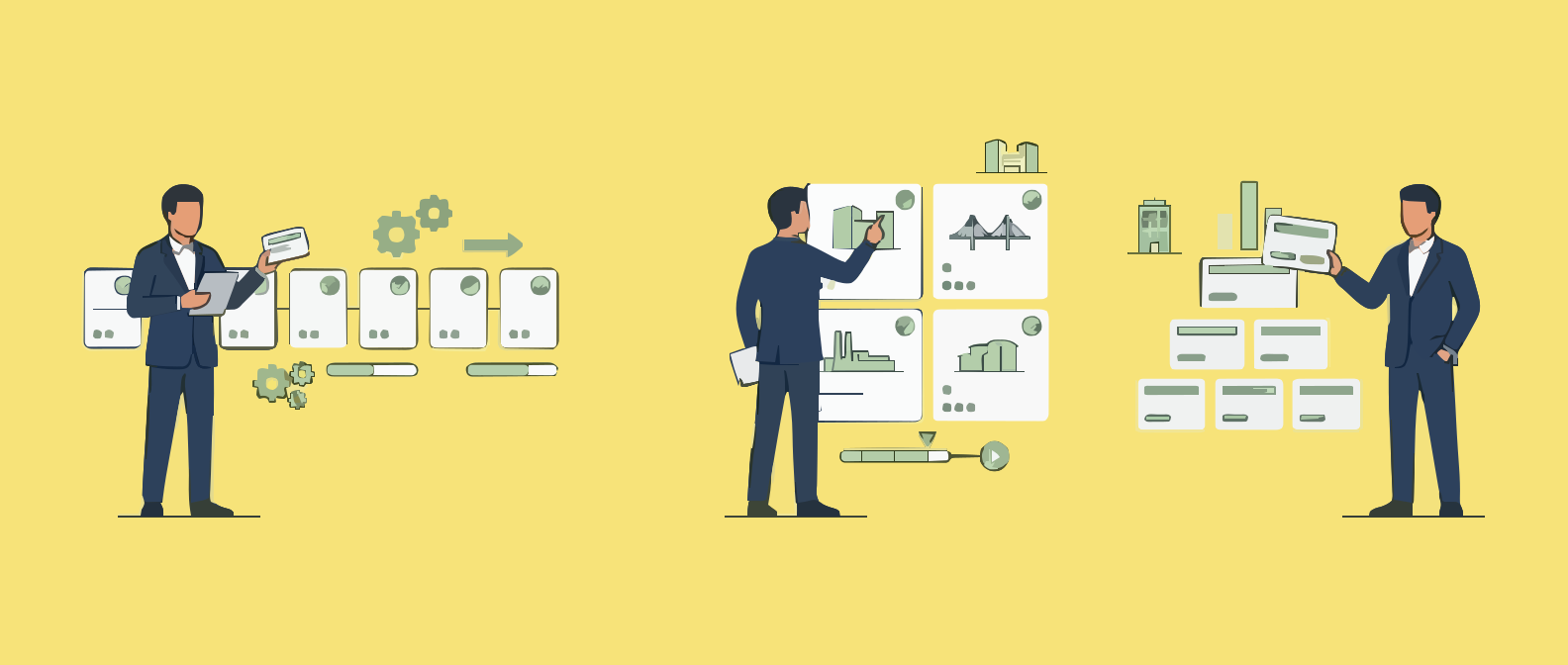
Enterprise project management software overlaps with both PPM software and work management tools, but the three categories solve different problems.
Work management tools mainly help teams organize tasks, collaborate, and coordinate day-to-day activity. They can work extremely well when projects are relatively independent, and governance requirements are limited.
Their limits tend to show up once organizations start adding separate systems for resource planning, financials, portfolio reporting, approvals, compliance, and advanced scheduling. The individual tools may keep working fine; the overall environment becomes fragmented.
Project Portfolio Management operates at a higher decision level. PPM helps organizations decide which projects should be prioritized, funded, delayed, or stopped, and how limited resources and investment should be distributed across competing initiatives.
A simple way to separate them:
PPM asks: Are we investing in and prioritizing the right work?
Enterprise project management asks: How do we manage and control project execution consistently across the organization?
In practice, the boundaries overlap. Portfolio decisions depend on reliable project data, and project execution depends on clear organizational priorities. Many enterprise project management systems include substantial PPM capabilities as a result.
The key point: enterprise project management isn't just another name for portfolio management. It covers the broader operating environment in which projects are executed, governed, financed, resourced, and reported.
6. How Enterprise Project Management Works Across Different Organizations
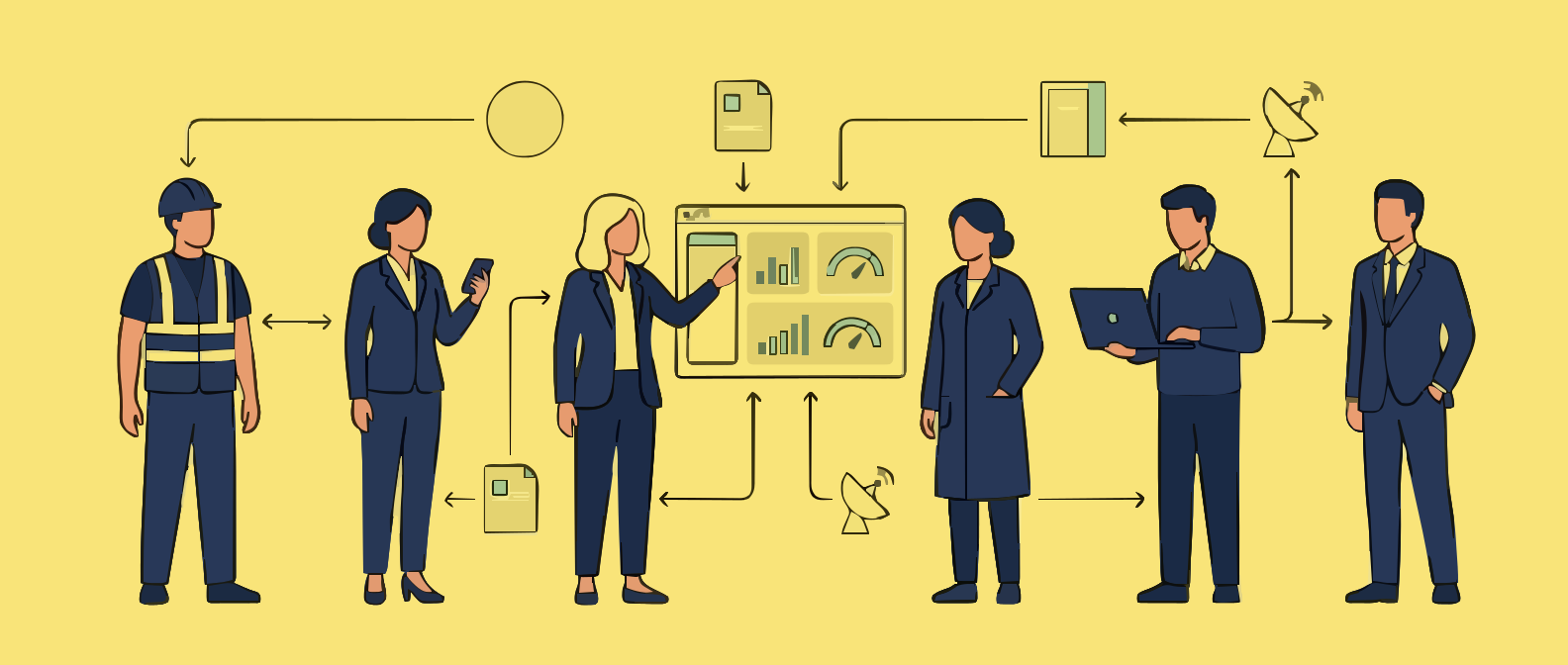
Enterprise project management isn't tied to one sector or methodology. What changes from one environment to the next is the type of complexity being managed.
IT and digital transformation. IT and digital transformation projects — ERP, cloud, cybersecurity, and infrastructure — span teams, partners, and business functions. Enterprise project management helps coordinate dependencies, resources, budgets, and priorities.
New product development. New product development projects involve technical, commercial, financial, and operational decisions. Structured lifecycle and Stage-Gate processes help control progress while maintaining visibility across the development pipeline.
Pharmaceutical and regulated environments. Pharmaceutical and regulated environments require documentation, approvals, risk management, traceability, and regulatory readiness across long, cross-functional lifecycles. Enterprise project management helps preserve control across long, cross-functional lifecycles.
Manufacturing and capital projects. Manufacturing and capital projects compete for engineering resources, equipment, capacity, and investment budgets. Cross-project visibility helps prevent local plans from creating wider operational bottlenecks.
Public sector and highly governed environments. Public sector and highly governed environments often require stronger financial accountability, formal approvals, security, auditability, and controlled deployment.
The details differ by industry, but the underlying need is the same: manage complexity without losing visibility, consistency, or control.
7. How to Choose Enterprise Project Management Software

There's no universal “best” enterprise project management software. The right choice depends on how an organization actually manages projects and where complexity creates the most risk.
Project and process complexity should be the first consideration. The system needs to support the organization's real project structures, lifecycles, dependencies, and methodologies without forcing teams into unnecessary complexity.
Resource and financial management comes next. If people, skills, budgets, and costs are shared across initiatives, the software should make those dependencies visible across projects, not just within them.
Governance and reporting matter just as much. Evaluate whether approvals, project reviews, changes, and management reporting can be handled directly within the system, rather than recreated manually around it.
Integration, security, and deployment deserve early attention too. Enterprise project software rarely operates alone, and the ability to connect with existing systems can matter as much as any individual project-management feature.
Scalability and configurability are worth assessing directly. Processes, reporting needs, and organizational structures change over time, and a system that can't adapt becomes another constraint.
Usability should never be sacrificed for enterprise capability. Most users don't need access to every feature. Project managers, team members, executives, finance, and resource managers all interact with the system differently, and good enterprise software provides depth where it's needed without forcing complexity onto everyday users.
The goal isn't to pick the software with the most features. It's to pick the system that best reflects how the organization needs to plan, control, and deliver projects.
8. How Cerri Project Supports Enterprise Project Management
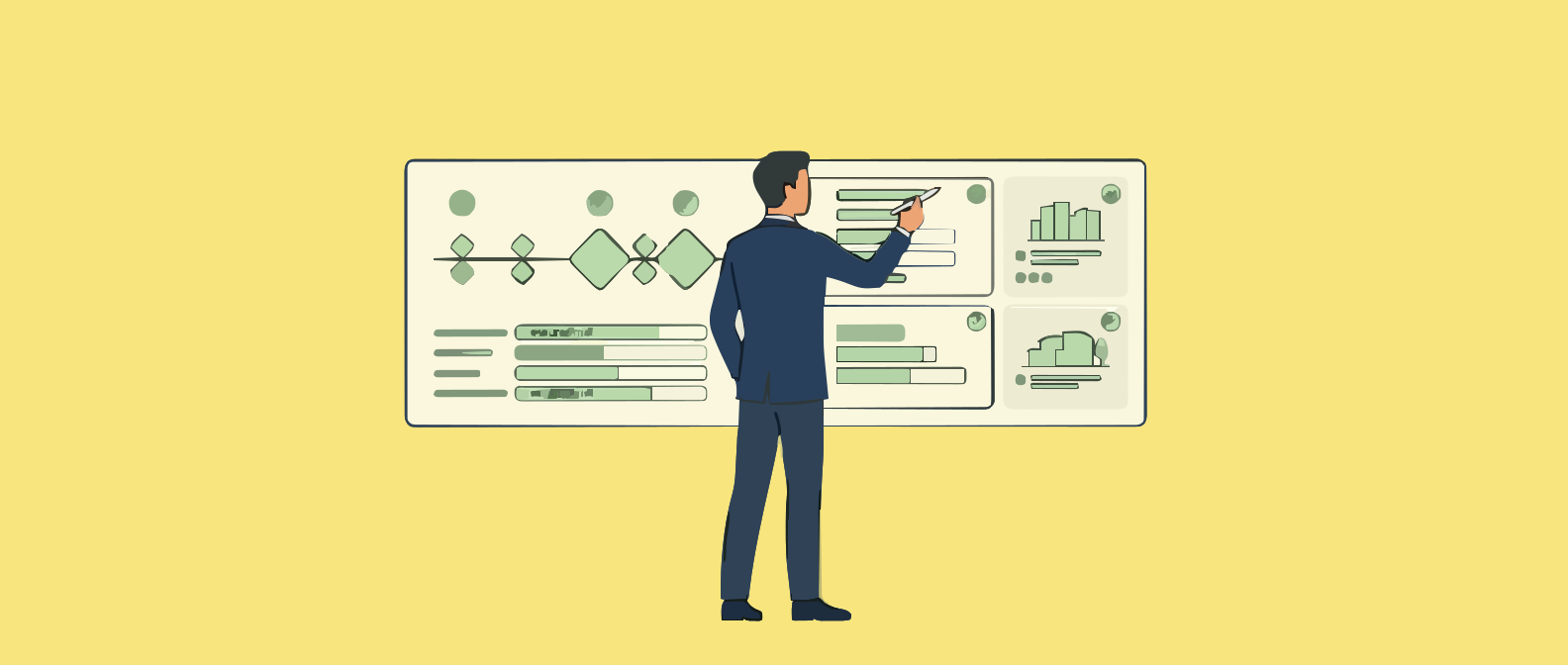
It combines project planning and execution with resource and capacity management, financial control, portfolio visibility, and structured governance within one shared project environment.
Detailed project plans stay connected to budgets, resources, risks, documents, and management reporting, giving teams and decision-makers one consistent view of execution.
For organizations running structured development or approval processes, Cerri Project also supports configurable lifecycle and Stage-Gate workflows. Deliverables, reviews, decision criteria, and approval points stay directly connected to project progress, rather than living in separate documents or spreadsheets.
Resource and capacity planning provides visibility into current allocations and future demand, helping organizations identify constraints across projects before they disrupt execution.
Cerri Project also supports enterprise integrations and flexible deployment, helping organizations fit project management into their wider technology and security environment.
The objective isn't simply to centralize more project data. It's to provide the structure, visibility, and control needed to manage complex projects consistently across the enterprise, while keeping teams focused on execution.
Key Takeaways
Enterprise project management software becomes valuable once project management stops being an isolated team activity and becomes an organization-wide discipline.
It extends beyond task tracking by connecting project execution with resources, financials, governance, reporting, and cross-project visibility.
The right enterprise project management system isn't necessarily the one with the longest feature list - it's the one that best reflects the complexity, processes, decision structures, and control requirements of the organization using it.
Get that fit right, and project information becomes more reliable, constraints surface earlier, and decisions get made with more clarity.
Frequently Asked Questions
What is enterprise project management software?
Enterprise project management software is a centralized system for planning, executing, governing, and monitoring projects across multiple teams, departments, and business units. It typically combines project planning with resource management, financial control, reporting, governance, portfolio visibility, security, and enterprise integrations.
What is the difference between project management and enterprise project management?
Project management focuses primarily on delivering individual projects. Enterprise project management adds organization-wide coordination across multiple projects, including shared resources, common governance, financial visibility, cross-project dependencies, and management reporting.
What is the difference between enterprise project management software and PPM software?
Enterprise project management software supports the broader execution and control of projects across an organization. PPM software focuses specifically on portfolio-level decisions such as project prioritization, investment, capacity allocation, and portfolio balance. Many enterprise systems combine both.
When does a company need enterprise project management software?
It becomes relevant once projects increasingly span departments, resources are shared between initiatives, management reporting requires manual consolidation, financial and project information are disconnected, or governance, integration, and security requirements exceed what lightweight project tools can support.
Is enterprise project management software only for large companies?
No. Project complexity matters more than company size. Smaller organizations managing highly regulated, capital-intensive, long-running, or cross-functional projects may need enterprise-level project controls even with relatively few projects.
What features should enterprise project management software include?
Common capabilities include project planning and scheduling, resource and capacity management, financial control, workflow and governance management, portfolio visibility, reporting, document management, security, and integration with other enterprise systems.
What is the difference between enterprise project management software and work management software?
Work management software primarily supports task organization and team collaboration. Enterprise project management software adds the structures needed for more complex environments, such as cross-project resource planning, financial management, governance, advanced scheduling, reporting, security, and enterprise integration.
What is an EPMO?
An Enterprise Project Management Office (EPMO) is an organization-wide function that may establish common project standards, governance, reporting, prioritization, and portfolio oversight. Enterprise project management software provides the shared information and controls an EPMO may use to perform these functions.
How useful was this article?
Get enterprise PM insights, no noise
A bi-monthly briefing on Stage-Gate governance, portfolio management, and enterprise delivery best practices.
No spam. Unsubscribe anytime.
Prefer video? Watch on YouTube
Walkthroughs, Stage-Gate demos, and manufacturing PM best practices on our channel.