Most organizations do not struggle to generate ideas. They struggle to decide which ones should actually move forward. This guide explains what project demand management really is, why it fails in predictable ways, and how to build a structured process that connects demand, capacity, and decision-making.
Most organizations do not struggle to generate ideas. They struggle to decide which ones should actually move forward.
Without a clear decision framework, every initiative looks justified in isolation.
New initiatives arrive constantly - product improvements, regulatory projects, IT upgrades, internal transformation programmes. Each one comes with a clear rationale. Each one has a sponsor. Each one competes for the same pool of capacity.
At first, this looks like a healthy pipeline. A sign of ambition and momentum. Over time, however, a different pattern emerges. Projects start without clear prioritization. Teams become overloaded. Decisions arrive late. Execution slows - not because teams lack capability, but because too much work is competing for the same resources at the same time.
The issue is rarely execution itself. It starts earlier - at the point where demand is evaluated, filtered, and committed to.
This is where project demand management becomes critical. Not as a simple intake process, but as a decision discipline that determines what should exist in the portfolio at all. This guide covers what project demand management actually means, why it fails in predictable ways, how to build a structured process, what tools support it, and how it connects to portfolio management and long-term delivery performance.

What is project demand management?
Project demand management is the discipline of deciding which initiatives should be allowed to consume organizational capacity.
Most definitions focus on capturing and cataloguing requests - building an intake funnel that collects ideas from across the business. In practice, this definition is too narrow.
Demand management is not about capturing requests. It is about deciding which initiatives the organization should commit to delivering - and which it should delay, descope, or decline entirely.
At its core, project demand management defines how to prioritize projects in a way that reflects both value and delivery reality.
That distinction matters because every approved initiative creates a real commitment. It draws on shared resources, introduces dependencies, and competes with existing work. Without structured decision-making at this stage, organizations build portfolios that cannot be delivered as planned.
What project demand management connects
Effective demand management sits at the intersection of three things that are often treated separately:
- What the organization wants to do - strategic ambitions, growth objectives, competitive priorities
- What the organization needs to do - compliance requirements, operational maintenance, risk management
- What the organization can realistically deliver - available capacity, existing commitments, resource constraints
When these three are aligned before commitment, decisions become coherent. When they are not, execution becomes reactive.
Project demand management vs. project request management
These terms are sometimes used interchangeably, but they represent different things.
Project request management is a subset of demand management. It covers the mechanics of how requests are submitted and tracked. Demand management encompasses the full decision process - including evaluation, comparison, prioritization, capacity validation, and formal approval.
Organizations that only do request management often find themselves with structured intake but weak filtering. Requests are collected, but not meaningfully evaluated against each other or against delivery reality.

Why does project demand management fail?
Most organizations do not lack ideas or initiative. They lack a reliable way to compare, filter, and sequence those ideas before committing to them. As a result, demand management tends to break down in predictable ways.
Simple accumulation
Requests are collected, discussed, and gradually approved - often because each one appears reasonable in isolation. What is rarely evaluated is how these initiatives interact once combined. Over time, this produces a portfolio that reflects ambition but not feasibility. The problem is not any individual decision. It is the cumulative weight of decisions made without a shared view of total capacity.
Inconsistent evaluation criteria
Without structured criteria, prioritization becomes informal. Some initiatives are approved because they are urgent. Others because they are visible. Others because they are strategically important. These are not the same thing, yet they are often treated as equivalent. When the criteria vary by initiative or by who is in the room, the portfolio reflects influence and timing rather than organizational priority.
Capacity is ignored at intake
In many cases, this is not a process issue - it is a tooling gap, where demand and capacity are managed in separate systems. Many organizations assess value, risk, or strategic alignment during demand review - but fail to validate whether the initiative can actually be delivered alongside existing commitments.
This creates the familiar pattern where projects are approved confidently but struggle to progress once execution begins. The gap is not in effort or intent. It is between what organizations commit to and what they can realistically deliver at the same time.
Demand is disconnected from strategy
Initiatives originate from departments, functions, or immediate operational needs, but are not always evaluated in the context of broader business priorities. The result is work that consumes significant resources without contributing meaningfully to long-term objectives. When demand management lacks a strategic lens, the portfolio drifts - gradually filling with incremental or reactive work rather than intentional investment.
Rejection is treated as failure
In many organizations, the default answer to a project request is eventual approval. Declining work is seen as unresponsive or politically difficult. But prioritization without the ability to say no is not prioritization at all. If every initiative is approved, either immediately or eventually, demand management loses its filtering function.
> Why this matters: Without connecting demand, capacity, and decision-making, even well-structured processes break down under real-world pressure.

A framework for project demand management
Effective demand management does not require complex models. It requires discipline at the point where decisions are still flexible. The following five stages provide a practical structure for most organizations.
This demand management framework provides a structured way to evaluate and prioritize initiatives before they consume delivery capacity.
Stage 1: Structured intake
Every initiative should enter the process through a consistent channel with enough information to be evaluated - not just described. This typically includes:
- Business objective and strategic alignment
- Estimated scope, timeline, and resource requirements
- Expected benefit or outcome (quantified where possible)
- Sponsorship and accountable owner
- Dependencies on other initiatives or teams
Without this, prioritization becomes subjective - and quickly turns political. The goal is not bureaucracy - it is comparability.
Stage 2: Relative evaluation and scoring
From there, evaluation must move beyond simple justification. The question is not whether an initiative is valuable in isolation, but whether it is more valuable than the alternatives competing for the same resources.
Common evaluation dimensions include:
| Dimension | What it assesses | Why it matters |
|---|---|---|
| Strategic alignment | How directly does this initiative support defined business priorities? | Prevents the portfolio from filling with low-priority work |
| Value and benefit | What outcome does it deliver? Is it measurable? | Ensures commitments are tied to expected returns |
| Risk and complexity | What are the delivery risks? Does the organization have the capability? | Surfaces hidden difficulty before commitment |
| Urgency and timing | Is there a regulatory, contractual, or market driver? | Separates genuine urgency from political pressure |
| Capacity required | What resources, skills, and time does this need? | Connects value assessment to delivery reality |
The output is not a definitive ranking. It is a structured basis for comparison that makes trade-offs visible.
Stage 3: Capacity validation
Before any initiative is formally approved, it must be tested against delivery reality. This is the stage where demand management most often falls short.
At this point, project capacity planning ensures that approved initiatives reflect what the organization can realistically deliver.
Capacity validation should account for:
- Available resource capacity across the relevant teams and skills
- Existing commitments already drawing on those resources
- Timing dependencies - when the initiative can realistically start and be resourced
- Knock-on effects on other in-flight or approved work
Without this step, prioritization remains theoretical - and execution absorbs the consequences.
Stage 4: Explicit prioritization and trade-off decisions
Prioritization is not a reporting exercise. It is a mechanism for making trade-offs explicit - deciding what will move forward, what will wait, and what will not be pursued at this time.
This is also the stage where demand management most benefits from governance structure. Decisions made by a cross-functional group with clear authority are more durable than those made informally or through escalation.
Three outcomes are possible for any initiative at this stage:
- Approved - committed for delivery within a defined window
- Deferred - valid but delayed due to capacity or timing constraints
- Declined - not pursued, with a clear rationale
Communicating declined or deferred decisions with clear reasoning is important. It builds trust in the process and reduces the volume of informal escalation.
Stage 5: Formal approval and commitment
Approval should signal more than intent. It should represent a commitment that the organization is prepared to resource and support. This includes assigning a project lead, confirming resource allocation, and establishing baseline expectations for scope and timeline.
Without this formalization, approved projects can remain in a grey zone - prioritized in principle but not funded or staffed in practice.

Demand management vs. portfolio management: what is the difference?
Demand management is often confused with portfolio management, but they operate at different points in the project lifecycle and serve different purposes.
| Focus and timing | |
|---|---|
| Project demand management | Operates before commitment. Shapes what enters the portfolio. Decisions are still flexible - initiatives can be delayed, re-scoped, or rejected without disruption. |
| Portfolio management | Operates after commitment. Balances performance across active projects. Monitors progress, manages dependencies, and adjusts priorities across work already in flight. |
This distinction matters because many organizations attempt to solve demand problems at the portfolio level. They introduce dashboards, governance structures, and reporting mechanisms to control execution - without addressing how projects were selected in the first place.
When demand management is weak, portfolio management becomes reactive - forced to manage conflicts that should never have been approved together.
In practice: demand management determines whether the portfolio is viable. Portfolio management determines whether it is controlled.
IT demand management and project portfolios
Project demand management is particularly important in IT environments, where demand originates from multiple business units simultaneously and often competes for the same specialist resources.
IT demand management adds a layer of technical evaluation to the standard process. In IT environments, initiatives must also be assessed for:
- Technical feasibility and architectural compatibility
- Security, compliance, and data governance requirements
- Infrastructure dependencies and integration complexity
- Availability of specialist technical skills
Without structured demand management, IT portfolios accumulate urgent operational requests alongside strategic transformation work, competing for the same engineering capacity.
The result is familiar: stalled transformation projects, resource-heavy operational work, and a growing backlog.
Demand management in IT environments requires closer alignment between business stakeholders and technical leads at the evaluation stage - so feasibility and capacity constraints are surfaced before commitments are made.

The hidden cost of weak demand management
The impact of poor demand management is rarely immediate. It is cumulative - and by the time it becomes visible, it is already embedded across the organization.
Execution symptoms that originate in intake
Projects start with optimism, but slow down as resource conflicts emerge. Teams remain busy, yet progress becomes uneven. Decisions are delayed because key stakeholders are stretched across too many initiatives. Priorities shift without clear rationale.
These are typically attributed to execution failures. In most cases, they originate in how demand was managed - or not managed - before commitment.
Visibility and reporting deteriorate
When too many initiatives are active simultaneously, and data is fragmented across systems, organizations lose the ability to understand what is actually happening across the portfolio. Reporting becomes unreliable. Decisions slow. Risk increases.
Fragmented demand processes directly contribute to fragmented data - because initiatives enter the portfolio through different channels, with different levels of documentation and different governance standards.
Confidence in the decision-making process erodes
Over time, weak demand management erodes trust - not just in project outcomes, but in the process itself. Sponsors lose confidence in prioritization decisions. Teams lose confidence in the stability of approved plans. Leadership loses visibility into what the organization is actually committed to.
This erosion compounds. Once stakeholders believe that formal prioritization does not reflect reality, they begin working around it - escalating directly, building informal coalitions, or simply starting work without approval.
Common mistakes that undermine demand management
Certain patterns consistently weaken demand management, even in otherwise mature organizations.
Treating intake as the objective
When capturing requests becomes the focus, evaluation and prioritization remain informal. This creates the illusion of structure without the substance. A well-designed intake form does not, by itself, produce better decisions.
Informal prioritization disguised as formal process
Even without a formal structure, prioritization still happens - through escalation, relationship, visibility, or urgency. The difference is that it becomes implicit rather than transparent. Initiatives advance because of who sponsors them, not because of systematic evaluation.
Capacity omitted from evaluation
Evaluating value and strategic fit without validating capacity produces the most common failure mode: a portfolio of well-justified initiatives that cannot be delivered simultaneously. Capacity must be part of the evaluation - not a separate conversation after approval.
Over-reliance on fragmented tools
Many organizations manage demand through a combination of spreadsheets, email chains, and project management tools that are not connected to each other. This slows decision-making, introduces inconsistencies, and makes it difficult to compare initiatives on common criteria.
The problem is not tools themselves - it is the absence of a single source of truth for demand, capacity, and priority.
What does project demand management software do?
Tools play a supporting role - but without a decision framework behind them, they surface data without improving decisions.
Most tools also fail to connect demand to capacity, which means initiatives are evaluated without understanding whether they can actually be delivered. The effectiveness of demand management depends primarily on structure, governance, and decision discipline.
That said, the right project demand management software reinforces that structure by providing:
Centralized demand visibility
A single repository for all incoming project requests, with consistent structure and status tracking. This replaces fragmented email chains and spreadsheets with a shared view that all stakeholders can trust.
Standardized evaluation and scoring
Configurable scoring models that allow initiatives to be evaluated against consistent criteria - strategic alignment, value, risk, capacity required - rather than case-by-case negotiation.
Capacity and resource integration
The ability to test incoming demand against current resource availability and existing commitments, in real time. This is the capability that most spreadsheet-based approaches cannot replicate effectively - and it is the one that has the most direct impact on delivery outcomes. Without this connection, demand management becomes an approval process rather than a decision discipline.
Traceability and decision history
A record of why decisions were made, what information they were based on, and how priorities have evolved. This is increasingly important for governance and audit purposes, and it allows organizations to learn from past prioritization decisions.
Portfolio-level reporting
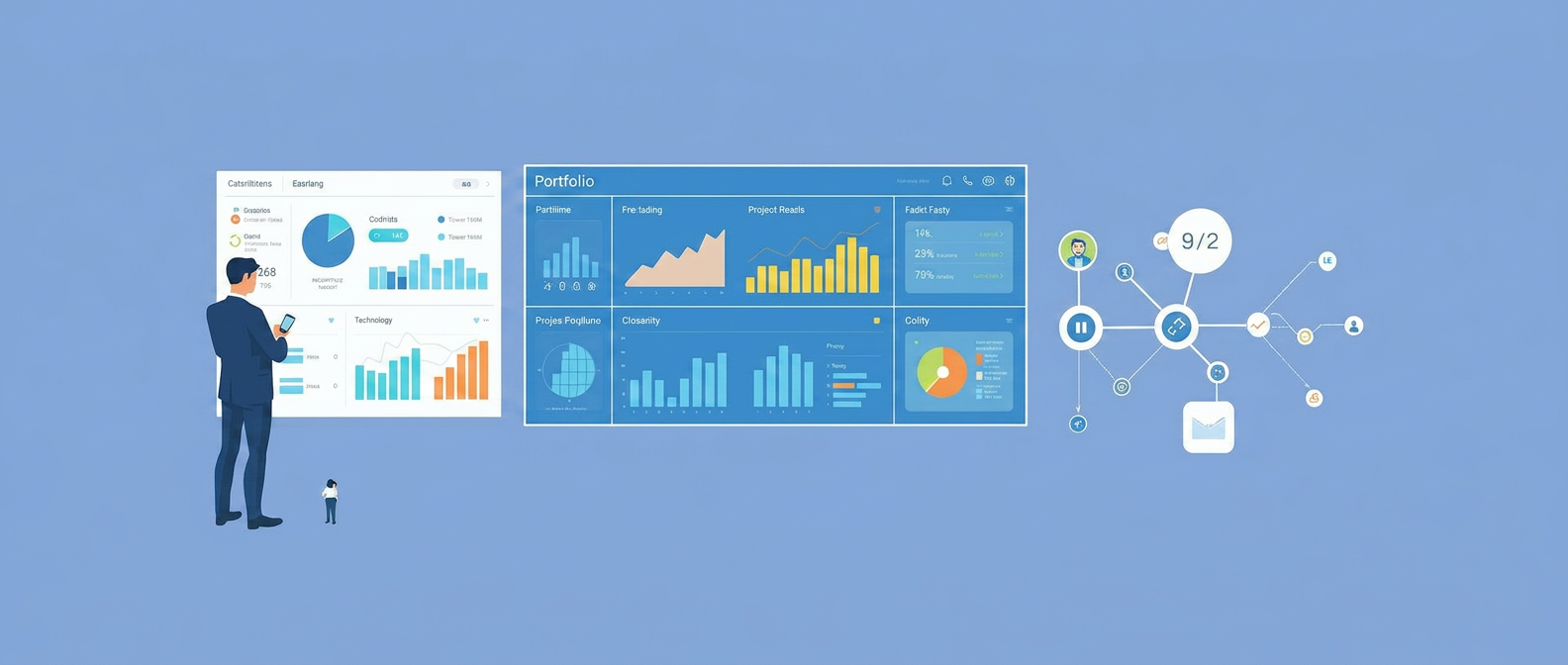
Dashboards that connect demand decisions to portfolio status - showing not just what has been approved, but how approved work is progressing and where capacity is being consumed.
> Key principle: The value of this five-stage structure is not in the process itself, but in what it prevents - demand entering the execution pipeline before it has been rigorously evaluated, compared, and matched to delivery capacity.
Without a defined process and clear governance, demand management software surfaces data without improving decisions. The technology amplifies the process - it does not replace it. Organizations that implement tools before establishing their evaluation criteria and decision authority typically see limited benefit.
Demand management and workflow: how they connect
Project demand management and workflow management are closely related but serve different functions.
Demand management determines what work enters the portfolio. Workflow management governs how that work moves through delivery - the sequencing of tasks, approvals, handoffs, and stage gates that govern execution.
In practice, strong demand management creates the conditions for effective workflow management. When work enters execution with clear scope, assigned resources, and realistic timelines, workflow governance is more straightforward. When demand has been poorly filtered or capacity has not been validated, workflow management is constantly adapting to constraints that should have been resolved earlier.
The connection matters particularly in organizations where demand is high-volume and fast-moving - product development, IT services, project-based professional services. In these environments, both disciplines need to be well-defined and connected, or bottlenecks appear at the intake stage and propagate through delivery.
Building a demand management process: where to start
Organizations approaching demand management for the first time - or looking to strengthen an existing process - do not need to implement everything at once.
A practical starting point focuses on three things:
1. Define a consistent intake structure
Agree on the minimum information required to evaluate a project request. This does not need to be complex - a standard template covering objective, scope estimate, expected benefit, and resource requirement is often enough to begin creating comparability across requests.
2. Establish shared evaluation criteria
Define the dimensions on which initiatives will be compared, and agree on how they will be weighted. This conversation - deciding what matters most to the organization - is often more valuable than the scoring itself.
3. Introduce a regular review cadence
Demand should be reviewed at a defined frequency by a group with the authority to approve, defer, or decline. Monthly or quarterly cycles are common depending on the volume and velocity of demand. The cadence creates accountability and prevents the informal accumulation of unapproved work.
From this foundation, organizations can layer in capacity integration, scoring models, and formal governance over time. The goal is not a perfect process from the start - it is a consistent one that improves with use.
Conclusion
Project demand management is not about managing requests. It is about making decisions early enough to shape outcomes later.
Organizations that approach demand as a decision discipline operate differently. They do not try to do everything at once. They make trade-offs explicit. They align commitments with what can actually be delivered. And they invest in the structure - criteria, governance, capacity validation - that makes those decisions defensible and consistent.
The result is execution that is more predictable - not because projects are simpler, but because the portfolio itself is more coherent.
Project success does not start with execution. It starts with choosing the right work in the first place.
Because when too much work enters the system, execution does not fail immediately - it fails gradually, under the weight of decisions made too late.
How useful was this article?
Get enterprise PM insights, no noise
A bi-monthly briefing on Stage-Gate governance, portfolio management, and enterprise delivery best practices.
No spam. Unsubscribe anytime.
Prefer video? Watch on YouTube
Walkthroughs, Stage-Gate demos, and manufacturing PM best practices on our channel.