
The final stage of NPD, product launch, is where development meets market reality. This guide covers launch readiness, go-to-market execution, and post-launch governance.
The climax of any New Product Development (NPD) project is its launch - the moment when the product transitions from concept to reality, ready to meet its audience. This phase serves as the definitive test, marking the culmination of a rigorous Stage-Gate process that has meticulously guided the project from its initial ideation. Here, the collective vision of talent and leadership faces its ultimate challenge: acceptance by the consumer. The successful passage through this final gate confirms that project activities and stakeholder inputs are perfectly aligned with the market's demands.
Strategizing for launch: navigating through complexity
Launching a product is the result of a complex interplay of engineering, design, production, and marketing efforts, all refined and validated through successive gates of the Stage-Gate process. Each of these stages integrates comprehensive planning and coordination, ensuring that every aspect of the product - from quality assurance and cost-effectiveness to aesthetic and consumer expectations - is thoroughly vetted.
The success of the product launch hinges on the well-orchestrated final stages of the Stage-Gate process, which facilitate seamless expertise and insight flow across the development lifecycle. Governance frameworks are crucial at this stage, ensuring transparency and enabling optimal decision-making through rigorous stakeholder engagement and systematic evaluation. This ensures that each step, from initial concept to market debut, adheres to the highest standards of quality and strategic alignment.
Scorecard system: tracking success beyond the launch
Implementing a balanced scorecard system allows organizations to monitor progress and identify issues through the final gate and beyond. This system evaluates crucial aspects from sourcing to distribution, including:

Financial Impact: Analyzes the launch's effect on Return on Investment (ROI), revenue growth, and market share, providing insight into its economic success.

Customer Impact: Focuses on the product's influence on customer experience, loyalty, and market acceptance, crucial for understanding consumer satisfaction and long-term viability.

Internal Operations: Evaluates improvements in quality control, operational efficiency, and business performance, ensuring that the product meets market standards and internal processes support its launch effectively.

Innovation and Lessons Learned: Assesses contributions to Research & Development (R&D), knowledge gained, and alignment with business strategy, highlighting the project's role in fostering innovation and strategic growth.
By tracking these metrics, organizations can gain clear visibility into the project's status and trajectory, allowing stakeholders to make strategic adjustments that enhance the NPD project's outcomes. This approach not only streamlines the product launch process but also lays the groundwork for continuous improvement and future project success.
Resource planning: the keystone of execution
The product launch stage in NPD demands the most intensive resource utilization, making effective resource planning and management critical for successful execution. This phase's complexity necessitates strategic allocation of talent and resources across production, distribution, and marketing to positively impact the bottom line.
Challenges such as meeting projected timelines often stem from a scarcity of talent or resources. A robust resource plan, coupled with a risk management strategy, is essential to mitigate delays and enhance the product's time to market.
Strategic resource planning encompasses:
1. Evaluating Talent Needs: Determining if internal talent suffices or if external recruitment is necessary.
2. Resource Availability Tracking: Establishing methods to monitor resource availability and skill sets organization-wide.
3. Supply Chain Coordination: Creating strategies for seamless activity transitions along the supply chain.
4. Bottleneck Identification: Setting up systems to detect and address potential bottlenecks and issues.
5. Risk Management: Implementing strategies to manage unforeseen changes and challenges.
6. Scenario Analysis: Conducting "what-if" scenarios to assess the impact of resource reassignments on existing projects.
Effective resource planning aims to optimize talent use without derailing the organization's strategic goals, acknowledging the crucial role of team execution in the product's market success.
Cerri Project: driving product launch success
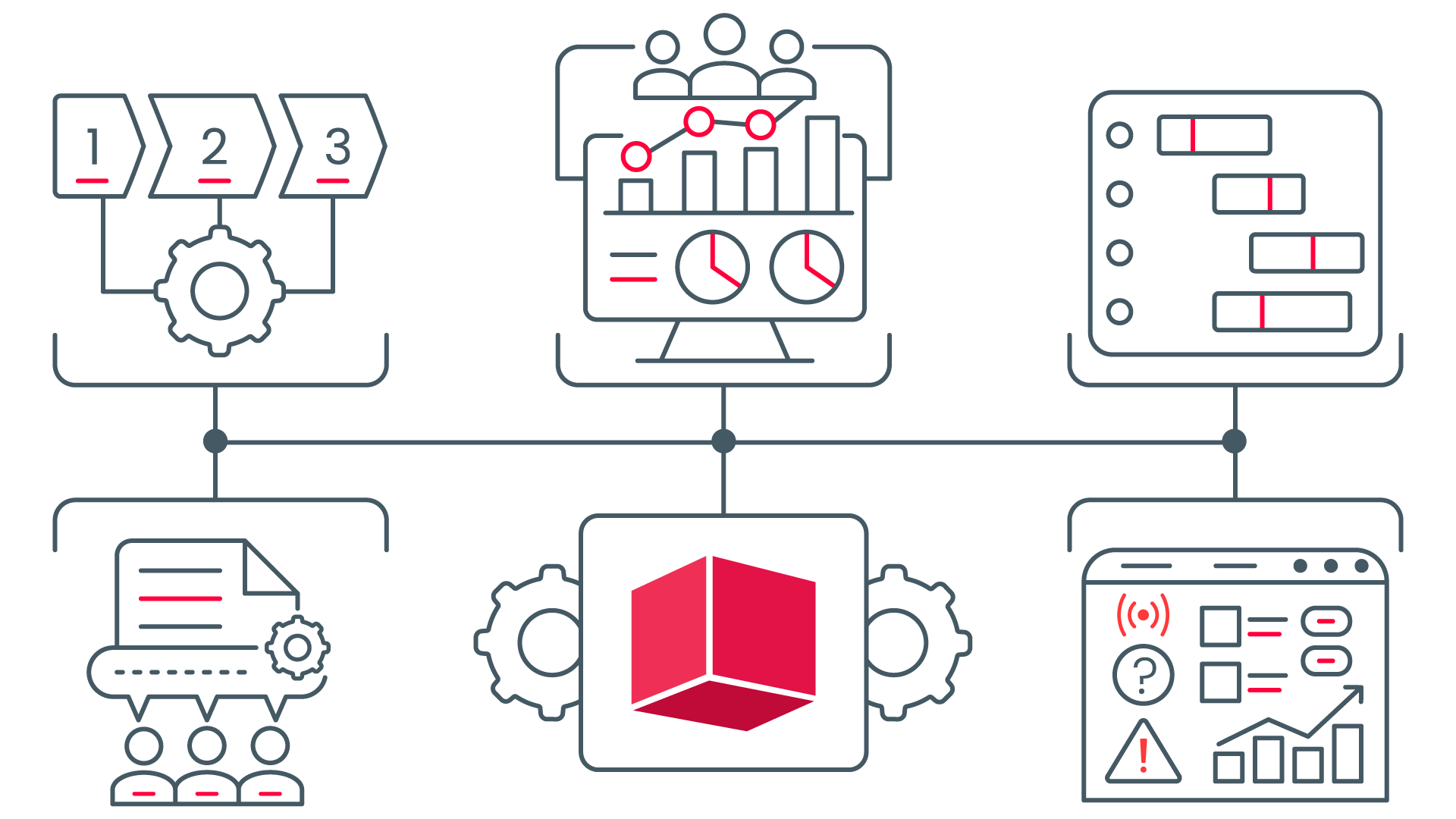
At the heart of every NPD initiative is the pivotal product launch phase, where innovative ideas transition into market-ready products. Cerri Project's suite of planning tools is integral to this phase, facilitating the gated process workflows that ensure each step progresses smoothly through to the final gate. It enhances visibility into resource allocation and guarantees that all project activities are strategically aligned. The Resource and Project Planning modules provided by Cerri Project equip teams to:
- Coordinate NPD phase reviews and gated process workflows.
- Develop comprehensive product launch plans using sophisticated Gantt charts.
- Assign tasks and monitor team progress effectively.
- Manage resource distribution and address conflicts efficiently.
- Track resource availability and utilization to maintain project timelines.
- Formulate teams with the optimal mix of skills for project success.
- Implement availability management and capacity planning strategies.
- Maintain a detailed and transparent review process.
- Define essential metrics, KPIs, and risk assessments to gauge project performance.
How useful was this article?
Get enterprise PM insights, no noise
A bi-monthly briefing on Stage-Gate governance, portfolio management, and enterprise delivery best practices.
No spam. Unsubscribe anytime.
Prefer video? Watch on YouTube
Walkthroughs, Stage-Gate demos, and manufacturing PM best practices on our channel.