Security, privacy, residency, and sovereignty each answer a different question about enterprise project data - and together they determine how much control an organization retains.
Enterprise project management software can hold some of an organization's most sensitive information: financial forecasts, product roadmaps, R&D plans, resource data, strategic investments, risk registers, and approval records.
Protecting this information is about more than preventing unauthorized access.
Organizations also need to understand how their data is protected, where it is stored, which laws apply to it, who can operate the underlying environment, and how much control they retain over deployment. These questions sit at the intersection of four related but distinct concepts: data security, data privacy, data residency, and data sovereignty.
These questions are becoming increasingly important as organizations rely more heavily on cloud software while regulatory, privacy, security, and sovereignty requirements continue to evolve.
This guide explains what data security means in enterprise project management software, how it differs from data privacy, data residency, and data sovereignty, what organizations should evaluate when choosing a provider, and why deployment choice matters.
1. Why project data requires enterprise-level security

Project management systems are sometimes treated as operational tools used primarily to coordinate tasks, deadlines, and teams.
At enterprise level, however, the information they contain can be considerably more sensitive.
A project management environment may include:
- financial plans, budgets, and forecasts
- new product development and R&D information
- strategic investment decisions
- employee and resource information
- contracts and controlled documents
- risks, issues, and compliance records
- executive reporting and portfolio priorities
- approval histories and decision records
A security breach involving this information can therefore expose more than individual project schedules. It can reveal future investments, commercially sensitive initiatives, financial assumptions, intellectual property, or internal decision-making.
This is particularly important for organizations operating in regulated industries, managing government or infrastructure programs, developing proprietary products, or running projects across multiple jurisdictions.
The security of enterprise project management software should consequently be evaluated as part of the organization's broader information-security and data-governance framework, not simply as a software feature.
2. Data security, data privacy, data residency, and data sovereignty are not the same thing
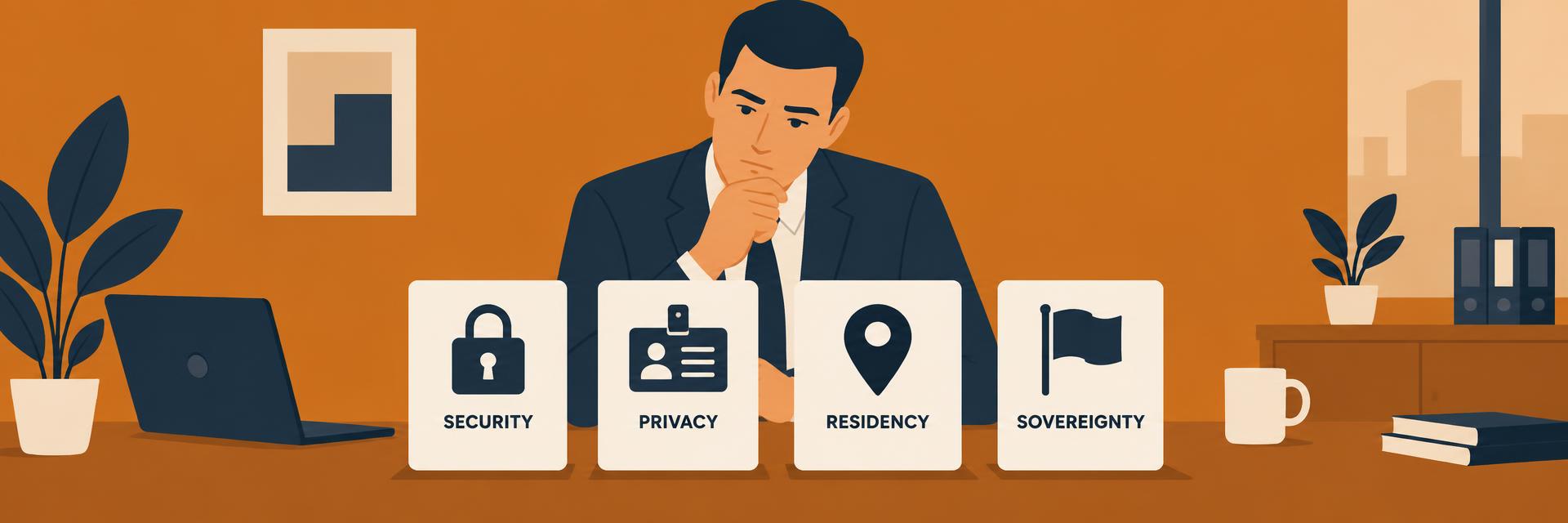
Four terms frequently appear in discussions about cloud software: data security, data privacy, data residency, and data sovereignty.
They are closely connected, but they answer different questions.
Data security
Data security concerns how information is protected against unauthorized access, loss, alteration, disclosure, or attack.
Typical controls include encryption, identity management, access permissions, authentication, monitoring, data loss prevention, backups, and audit logging.
The core question is: How is our information protected?
Data privacy
Data privacy concerns how personal and sensitive information is collected, used, and shared - and what rights individuals have over it. In enterprise project data, this typically applies to employee records, contractor details, and any personal information referenced in contracts or resourcing plans.
Regulations such as the EU's General Data Protection Regulation (GDPR) formalize many of these obligations, which is one reason data privacy and data sovereignty are so often discussed together for organizations operating in or with Europe.
The question here is: What rights and rules govern how personal information is used?
Data residency
Data residency describes the physical or geographic location where information is stored or processed.
An organization may, for example, require that its project data remain within Switzerland, Germany, the European Union, or another defined region.
The question here is: Where is our information located?
Data sovereignty
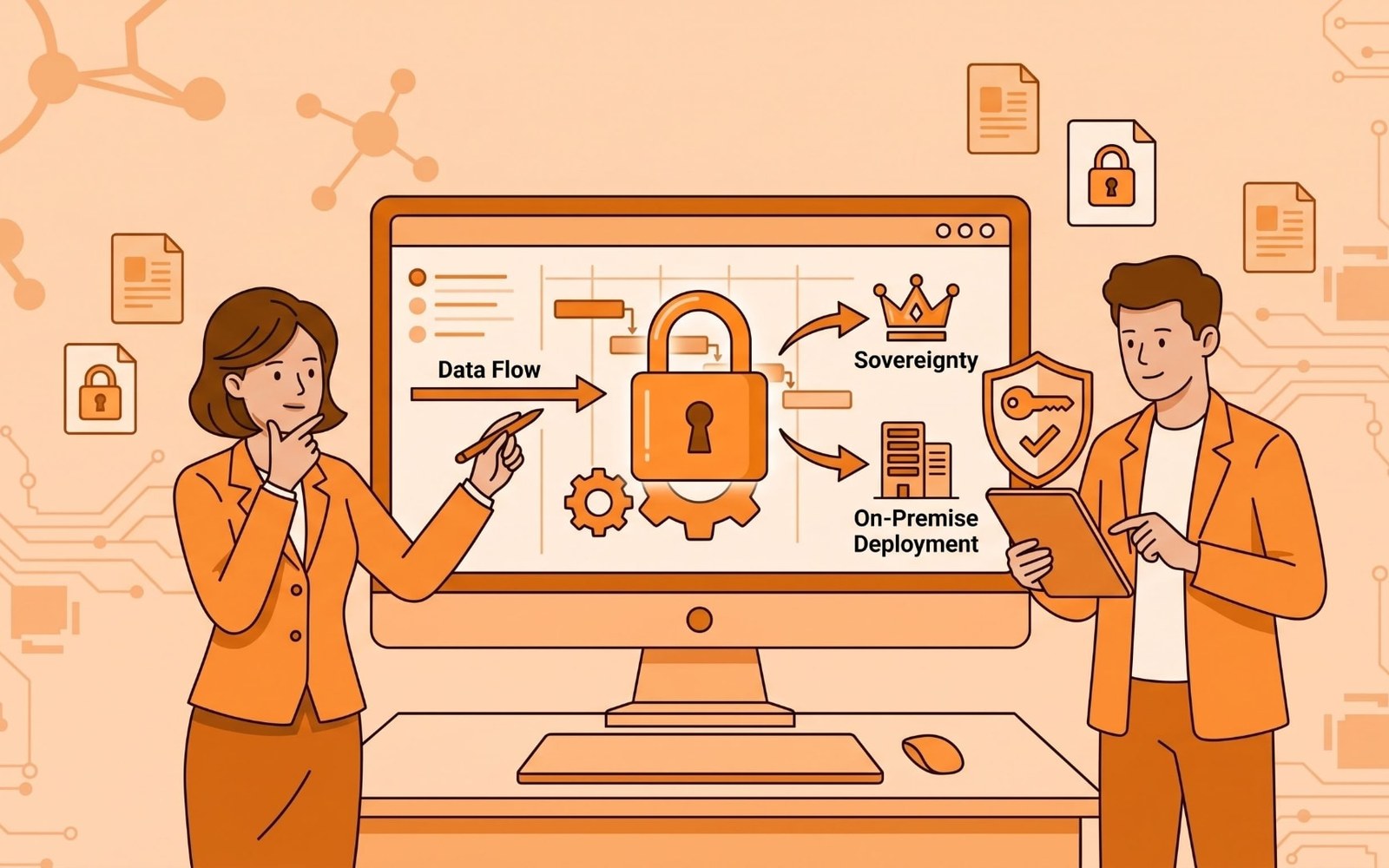
Data sovereignty goes further. It considers the legal jurisdiction governing the data, the organizations operating the infrastructure, the provider's corporate jurisdiction, and the laws that can potentially apply to the information.
The relevant question becomes: Who ultimately has legal and operational control over our data?
This distinction matters because these conditions do not automatically coincide.
Data can be securely encrypted, privacy-compliant, and stored in a European data center while still being operated by a provider subject to laws in another jurisdiction. That does not automatically make the service insecure or non-compliant. But it does mean that knowing the physical location of a data center does not provide a complete picture of sovereignty.
For enterprise buyers, the more useful question is therefore not simply: Where is our data hosted?
It is: Who controls the environment, under which legal framework, and how is it protected and used?
3. Why hosting location alone does not determine data sovereignty

Cloud infrastructure has made the physical location of data easier to choose.
Many providers now allow customers to select a country or region when creating an environment. This is valuable, particularly when organizations have specific data-residency obligations.
However, geographic location alone does not necessarily determine which legal frameworks can affect the provider.
A cloud environment can involve several layers:
- the software vendor
- the hosting provider
- the data-center operator
- administrative personnel
- subcontractors or support providers
- the legal entities controlling those companies
Each layer may introduce different legal, operational, and security considerations.
The US CLOUD Act illustrates why this distinction receives so much attention. It clarifies that service providers subject to US jurisdiction may be required to produce data within their possession, custody, or control, regardless of whether that data is stored inside or outside the United States.
This does not mean that software from US providers is inherently insecure, nor that organizations cannot use those services compliantly. Instead, it demonstrates why physical data location and legal jurisdiction should be evaluated separately.
This tension is especially visible in Europe, where strong data-protection requirements coexist with cross-border legal frameworks such as the CLOUD Act. It is one reason sovereign-cloud offerings have grown so quickly - and why the European Commission has developed a Cloud Sovereignty Framework that assesses sovereignty across factors including legal and jurisdictional control, data and AI, operations, supply chains, technology, and security and compliance.
For many organizations, particularly those operating in Europe or highly regulated sectors, sovereignty is ultimately a risk-management question. The appropriate level of control depends on the sensitivity of the information, regulatory obligations, contractual requirements, and the organization's own risk tolerance.
4. Why data sovereignty is becoming an enterprise software issue
Data sovereignty was once discussed mainly in government, defense, and critical infrastructure.
That is changing.
Organizations across Europe and elsewhere are paying greater attention to the location, processing, administration, and legal governance of sensitive information. Several factors are driving this shift.
Increasing regulatory complexity
Organizations frequently operate across several countries while their software providers, cloud infrastructure, and users may be located in entirely different jurisdictions. Understanding which rules apply to which layer of the environment is therefore becoming more important.
More sensitive information moving to cloud systems
Cloud software now supports functions that were traditionally maintained inside corporate infrastructure.
Project systems can contain highly strategic information about future products, investments, acquisitions, facilities, technology programs, and organizational priorities. As the sensitivity of cloud-hosted information increases, organizations naturally scrutinize the underlying environment more closely.
Greater scrutiny from procurement and information-security teams
Enterprise software selection increasingly involves stakeholders beyond the operational users of the application.
IT security, compliance, legal, data-protection, and procurement teams may all participate in the decision. A solution therefore needs to satisfy not only the functional requirements of project managers and PMOs, but also broader enterprise requirements around control, security, privacy, jurisdiction, and deployment.
Growth of sovereign and private-cloud models
These concerns are one reason sovereign-cloud, dedicated-cloud, and private-cloud offerings have gained greater attention.
They provide organizations with additional choices between the convenience of shared public-cloud infrastructure and the control of fully self-managed environments.
The growing discussion around sovereignty does not mean every organization requires an isolated or on-premise system. It means that organizations increasingly want to understand their options before deciding where sensitive enterprise data should reside.
5. What security should enterprise project management software provide?

Sovereignty is only one part of the picture.
Regardless of where software is hosted, enterprise project management systems need strong technical and organizational security controls. Several areas deserve particular attention.
Identity and authentication
Organizations should be able to control who can access the application and how identities are authenticated. For enterprise environments, this commonly includes integration with centralized identity systems, single sign-on, and appropriate authentication policies.
Role-based access
Not every user should see every project, document, budget, or strategic initiative.
Role-based permissions help organizations restrict access according to responsibility, department, project membership, or security level. This becomes especially important when one system supports multiple business units, subsidiaries, or confidential initiatives.
Encryption
Sensitive data should be protected both when it moves between systems and when it is stored.
Organizations should understand what encryption standards are used and which parts of the environment are covered.
Data loss prevention and incident response
Beyond encryption, organizations should understand what data loss prevention controls exist to reduce accidental exposure or malicious exfiltration of sensitive information - and what incident-response processes are in place if a security event occurs.
Auditability and traceability
Enterprise projects involve decisions as well as data.
Organizations may need to understand who changed information, who approved a decision, when an action occurred, and how the project evolved over time. Audit trails support both security investigations and governance requirements. They are particularly important in regulated environments, where traceability may be required long after an individual decision was made.
Data backup and recovery
Security also includes availability.
Organizations should understand how information is backed up, how quickly systems can be recovered, and what procedures exist if infrastructure fails or data becomes corrupted.
Administrative access
One of the less visible questions is who can access the underlying environment administratively.
Support teams, infrastructure operators, database administrators, and cloud providers may have different levels of privileged access. Enterprise buyers should understand how those privileges are controlled, logged, and reviewed.
Secure integrations
Project management software rarely operates in isolation.
It may connect with ERP systems, identity platforms, financial applications, document repositories, communication tools, or other enterprise systems. Those integrations create additional data flows that should be considered as part of the overall security architecture.
Strong application security therefore requires more than a checklist of individual features. It requires a clear understanding of how information moves through the entire environment.
6. Public cloud, private cloud, or on-premise?
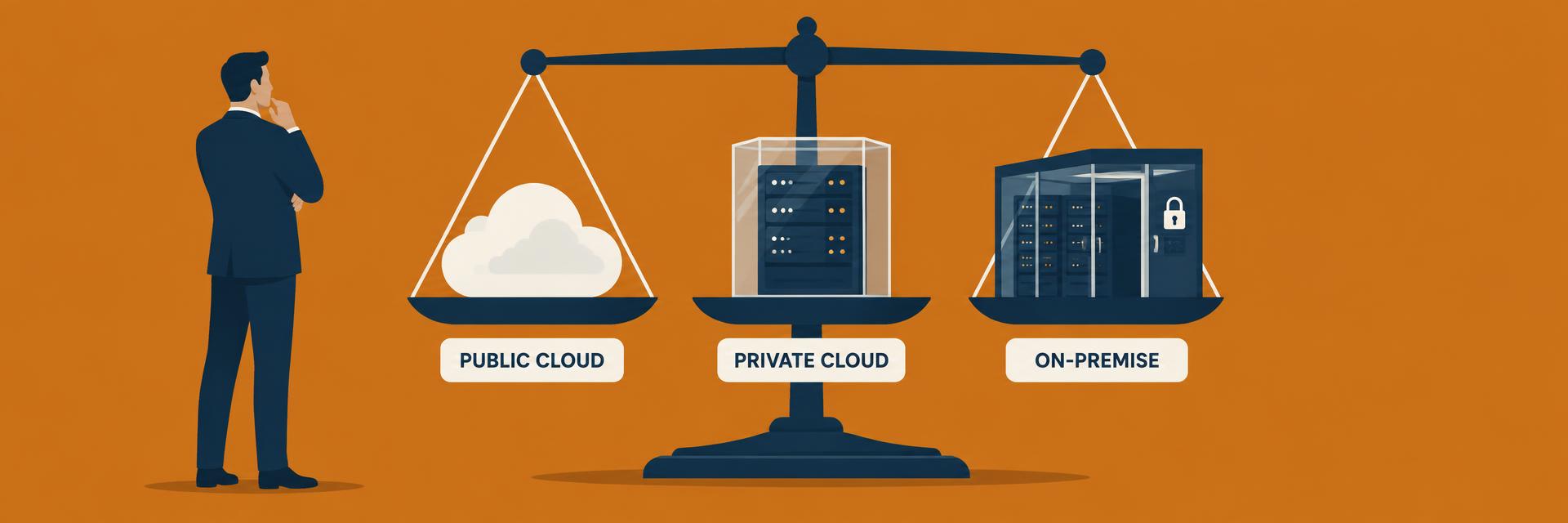
One of the most important security decisions organizations can make is where the project management environment will run.
There is no universally correct answer. Different deployment models provide different balances between convenience, control, responsibility, and infrastructure isolation.
Public cloud
Public-cloud software generally offers the simplest operational model.
The provider manages infrastructure, updates, availability, and much of the underlying security. For many organizations, this provides an effective balance between security, scalability, and administrative simplicity.
However, infrastructure control remains primarily with the provider and its hosting partners. Organizations with more specific sovereignty or infrastructure requirements may therefore need additional options.
Dedicated or private cloud
A dedicated private-cloud environment provides greater separation and control while retaining many of the operational advantages associated with managed cloud services.
Depending on the architecture, organizations may gain greater control over infrastructure location, access, configuration, or hosting arrangements. This can be particularly useful when standard multi-tenant cloud environments do not meet internal policies but fully self-managed infrastructure is unnecessary. Dedicated environments are also commonly used as part of sovereign-cloud strategies where greater infrastructure isolation and operational control are required.
On-premise or self-hosted deployment
On-premise deployment provides the greatest degree of direct infrastructure control.
The organization operates the application within an environment it manages, allowing internal teams to determine where systems run, how networks are configured, who receives administrative access, and how data is protected.
This can be important for organizations with highly sensitive information, strict regulatory requirements, isolated networks, or internal policies that restrict the use of external cloud infrastructure.
However, greater control also brings greater responsibility. Infrastructure security, maintenance, backups, monitoring, updates, and availability must be managed internally or through trusted partners.
For this reason, the most secure deployment model is not automatically the one with the most local control. The right model is the one that best matches the organization's capabilities, regulatory obligations, and security requirements.
7. Eight security and sovereignty questions to ask a software provider

Security documentation can quickly become technical.
For project leaders, PMOs, procurement teams, and executives evaluating software, a small number of practical questions can reveal a great deal about the underlying environment. 1. Where will our data be stored and processed? Can the organization select the country or region? Are backups and secondary processing locations included in that answer? 2. Which legal jurisdictions apply? Where is the software provider incorporated? Which entities provide the infrastructure? Could multiple jurisdictions apply? 3. Who can access the environment? Which internal or external personnel have administrative access, and how is privileged access controlled? 4. How is the data protected? What encryption, authentication, access-control, data loss prevention, monitoring, and backup mechanisms are in place? 5. What can users see? Can access be restricted by role, project, department, or other organizational structures? 6. What activity can be audited? Can administrators trace important changes, approvals, and user actions when required? 7. What deployment options are available? Is public cloud the only choice, or can the solution also support dedicated private-cloud or self-hosted environments? 8. What happens if our requirements change? Can data be exported? Can an organization move between deployment models? What happens to information when a contract ends?
These questions shift the evaluation away from generic statements such as "enterprise-grade security" and toward the controls that actually matter.
8. Data security and sovereignty in regulated environments
The importance of these questions increases significantly in regulated or highly controlled sectors.
Pharmaceutical companies, for example, manage projects containing R&D information, regulatory documentation, validation records, and commercially sensitive development plans. Documentation and traceability are already fundamental requirements within these environments.
Financial institutions manage projects involving regulatory programs, technology modernization, risk initiatives, and confidential investment information.
Government agencies and public bodies may have explicit requirements regarding infrastructure location, administrative access, or national jurisdiction.
Manufacturing organizations may need to protect new product development, engineering information, CAPEX plans, supplier data, or production strategies.
In these environments, software security cannot be separated from project governance.
Access controls, auditability, deployment architecture, and data ownership all contribute to an organization's ability to maintain control throughout the project lifecycle.
9. Why deployment choice matters in Cerri Project
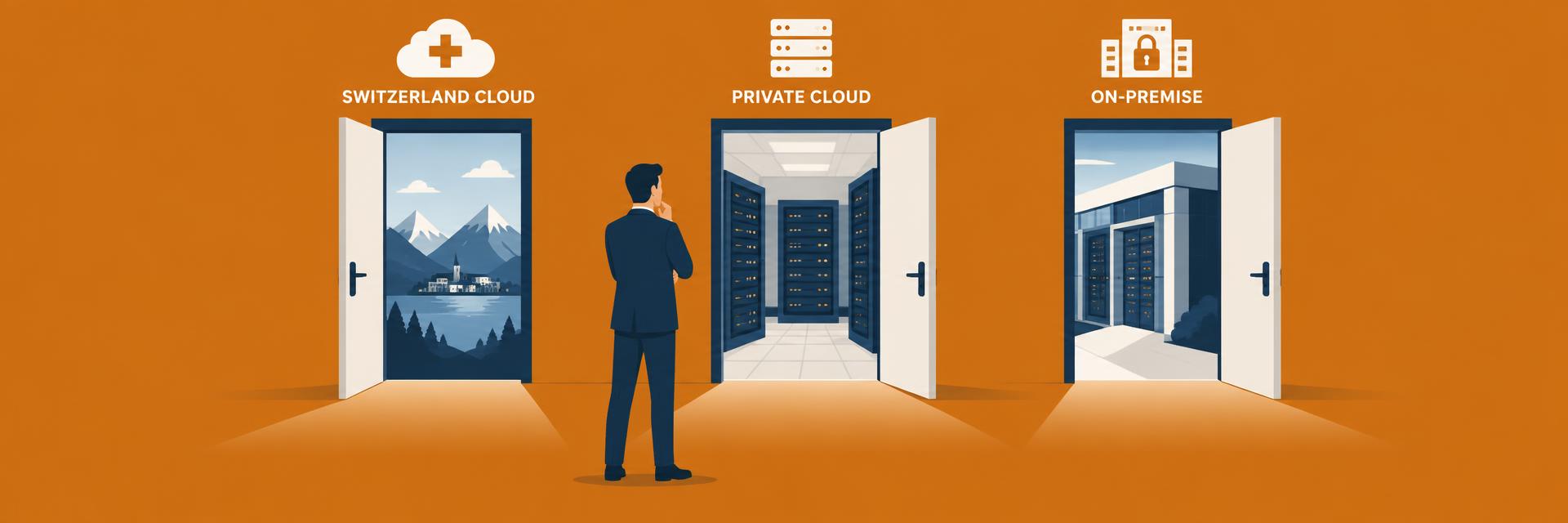
No single deployment model is appropriate for every organization.
A multinational manufacturer, public-sector organization, pharmaceutical company, and professional-services business may all reach different conclusions about how their project environment should operate.
The important principle is choice.
Security, privacy, regulatory, infrastructure, and sovereignty requirements should determine where enterprise project management software runs - rather than organizations being forced to adapt their policies to the limitations of the software.
This principle is reflected in Cerri Project's deployment options. Organizations can use cloud hosting in Switzerland, operate within a dedicated private-cloud environment, or deploy Cerri Project within their own infrastructure through an on-premise model.
These deployment options complement application-level controls designed to help organizations manage project information securely while maintaining the governance, visibility, and traceability required in complex enterprise environments.
For some organizations, a managed cloud environment will provide the right balance. For others, infrastructure isolation or direct control may be a requirement rather than a preference.
The objective should not be to prescribe one model, but to ensure that the organization retains the ability to choose.
Frequently asked questions
What is the difference between data security and data privacy?
Data security is about protecting information from unauthorized access, loss, or attack - through controls like encryption, access management, and monitoring. Data privacy is about the rules and rights governing how personal information is collected, used, and shared. A system can be highly secure without being fully privacy-compliant, and vice versa, so both need to be evaluated.
What is the difference between data residency and data sovereignty?
Data residency refers only to the physical location where data is stored or processed. Data sovereignty is broader: it covers the legal jurisdiction that governs the data, who operates the infrastructure, and which laws could compel access to it, regardless of where the data physically sits.
Does storing data in a specific country guarantee data sovereignty?
Not on its own. A provider can store data in a chosen country while still being legally headquartered - and therefore subject to legal obligations - elsewhere. Organizations need to look at the provider's corporate jurisdiction and operating structure, not just the data center location.
What is data loss prevention, and does it matter for project management software?
Data loss prevention refers to the controls and processes used to prevent sensitive information from being lost, leaked, or accessed without authorization. In project management software, this matters because project systems often hold financial data, R&D plans, and strategic documents that would be damaging if exposed.
What deployment options give organizations the most control over data sovereignty?
On-premise deployment generally provides the greatest direct infrastructure control, while dedicated private-cloud environments can provide greater isolation and operational control than standard public-cloud models. The degree of sovereignty still depends on the provider, operating model, and jurisdictions involved. Public cloud offers simplicity and scalability but places more of that control with the provider. The right choice depends on the organization's regulatory obligations and risk tolerance.
Conclusion: your project software should fit your data policy
Enterprise project management software sits closer to strategic business information than many organizations realize.
As a result, evaluating its security should go beyond asking whether the provider encrypts data or operates a secure data center.
Organizations should understand:
- where their information resides
- how it is protected
- which privacy rules and jurisdictions apply
- who can access the environment
- how activity is audited
- and which deployment models remain available
Security, privacy, residency, and sovereignty each answer a different part of that question. Together, they determine how much control an organization retains over one of its most valuable assets: its information.
There is no single architecture that suits every organization. What matters is having enough transparency and choice to select the environment that matches your own security, regulatory, and sovereignty requirements.
Because ultimately, your project management software should fit your organization's data policy - not force your data policy to fit the software.
We cover this in more depth in our companion video on the Cerri YouTube channel.
Sources & references
- U.S. Department of Justice - CLOUD Act Resources / The Purpose and Impact of the CLOUD Act. The CLOUD Act clarifies that providers subject to U.S. jurisdiction may be required to disclose data within their possession, custody, or control regardless of whether that data is stored inside or outside the United States. https://www.justice.gov/criminal/cloud-act-resources
- European Commission - Cloud Sovereignty Framework. The European Commission's Cloud Sovereignty Framework evaluates cloud sovereignty across areas including legal and jurisdictional control, data and AI, operations, supply chains, technology, security, and compliance. https://commission.europa.eu/news-and-media/news/sovereign-cloud-framework-explained-2026-06-01_en
- European Union - General Data Protection Regulation (GDPR). The GDPR establishes rules for the protection and processing of personal data and defines rights individuals have regarding how their personal information is collected, used, stored, and transferred. https://eur-lex.europa.eu/legal-content/EN/TXT/?uri=CELEX:32016R0679
How useful was this article?
Get enterprise PM insights, no noise
A bi-monthly briefing on Stage-Gate governance, portfolio management, and enterprise delivery best practices.
No spam. Unsubscribe anytime.
Prefer video? Watch on YouTube
Walkthroughs, Stage-Gate demos, and manufacturing PM best practices on our channel.